01history
From Castle Moat to Modern Waterside Park
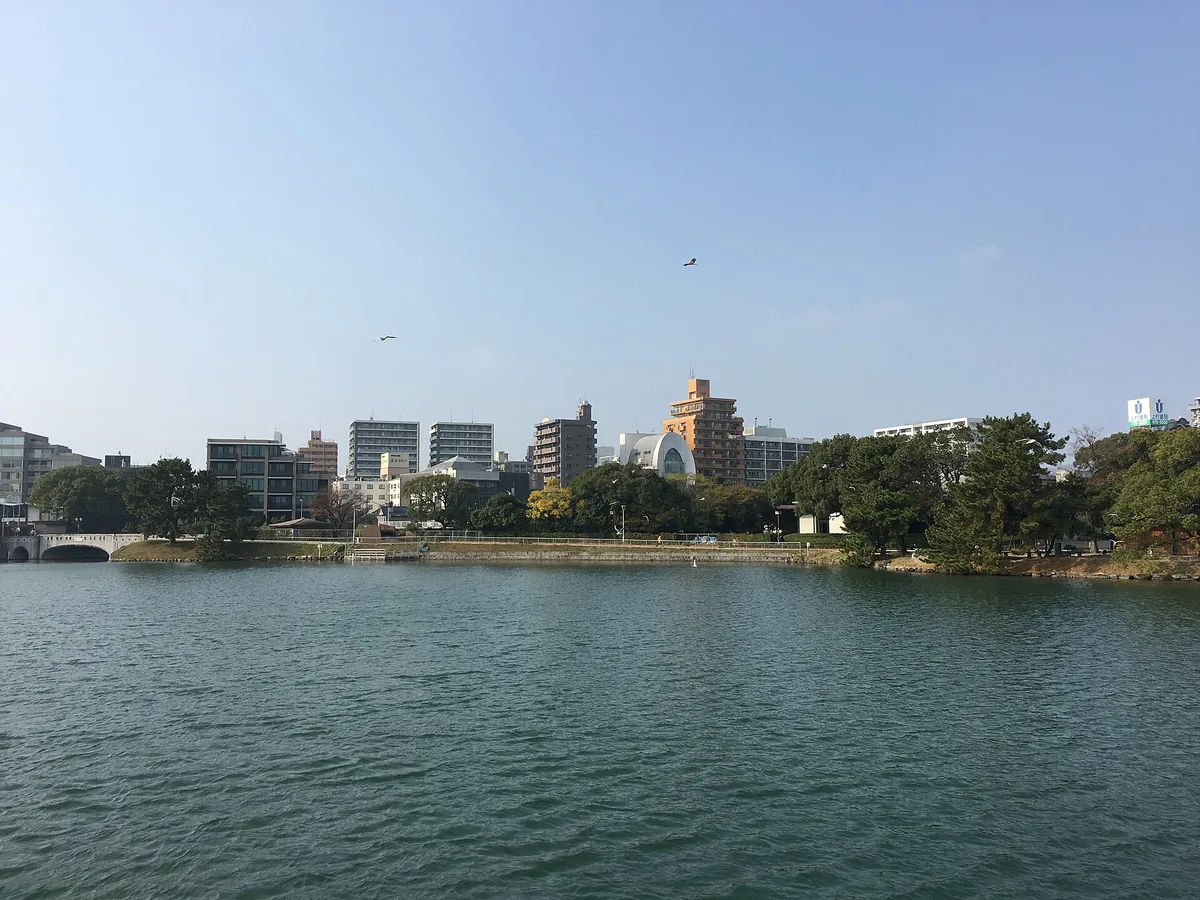
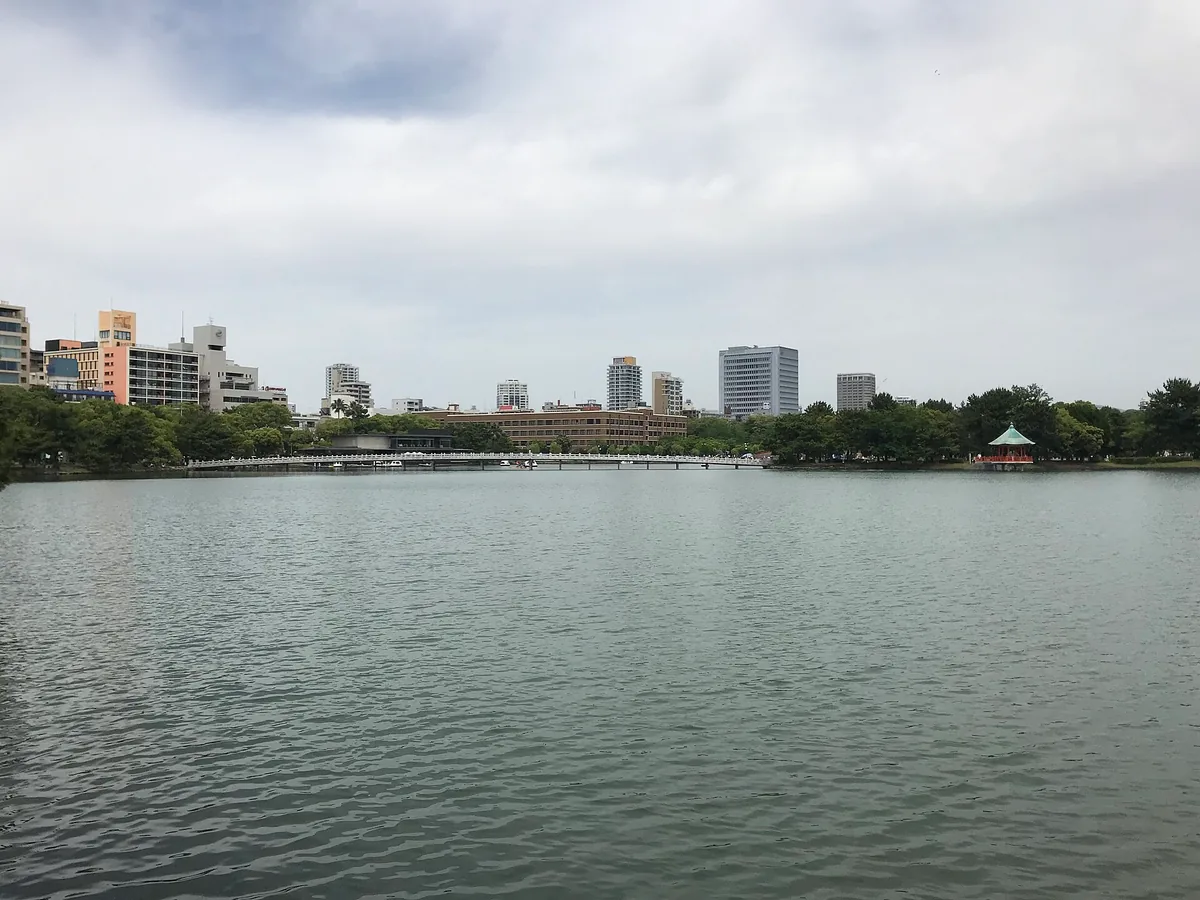
The water at Ohori Park occupies part of the former outer moat of Fukuoka Castle, tying the park directly to the city's early-modern geography. Fukuoka City's guide says the site became a public park after proposals to fill the old moat were set aside, and that it opened in 1929. The design is associated with West Lake in Hangzhou, China, helping explain the emphasis on water, islands and bridges.
The park operator describes the pond as a nationally registered monument and presents the landscape as both civic open space and cultural scenery. That combination matters when planning a visit: runners, families and commuters share a place whose form preserves a much older boundary of the castle town. Read the broad pond first, then use the islands and neighboring castle remains to understand how the historical moat became a recreation landscape.
- Historical layer: part of Fukuoka Castle's former outer moat.
- Modern park opening: 1929.
- Design reference: West Lake in Hangzhou, China.
- Present role: cultural landscape and everyday urban open space.
highlights
The Pond Loop, Three Islands and Four Bridges
The water is the organizing feature of Ohori Park. Official tourism guidance describes a path of about two kilometers around the pond, while the operator identifies three islands—Willow Island, Pine Island and Sweet Flag Island—linked by four bridges. Several bridge structures date from the park's opening and are recognized cultural properties of Fukuoka City. The islands carry mature pines and create a more enclosed sequence than the open perimeter path.
Ukimido, the small pavilion over the water, is another recognizable landmark. The operator records that it was moved from the former zoological garden in Higashi Park to Ohori Park in 1949. Crossing the island chain offers close water views and can shorten a point-to-point crossing, but it is not the same experience as completing the full perimeter. Choose the bridges for detail and atmosphere; choose the loop for changing skyline, bird and park views from every shore.
- Full perimeter: approximately two kilometers.
- Island chain: three named islands connected by four bridges.
- Ukimido: relocated to the park in 1949.
- The island crossing and complete pond loop serve different routes.
planning
A Practical Route and How Long to Allow
For a first visit, orient yourself at the park map, walk a substantial part of the pond perimeter, cross the island bridges, then return to the shore that best matches your next stop. Fukuoka City's guide describes an uninterrupted walk around the park as about 40 minutes; use that only as a movement benchmark, not as a complete sightseeing duration.
Allow roughly 60–90 minutes for the loop, bridges, photographs and a relaxed stop. The existing Which Japan planning range extends to about 150 minutes when the route includes children, birdwatching or a slower pace. The Japanese Garden, Fukuoka Art Museum, boat rental and castle area are separate additions and can each change the schedule. A useful decision is to choose one major add-on rather than assuming every facility belongs inside the basic park time.
- Short visit: one shore, the island bridges and a waterside pause.
- Core visit: approximately 60–90 minutes for the pond and islands.
- Longer visit: up to about 150 minutes at a relaxed park-only pace.
- Budget separate time for the garden, museum, boating or castle ruins.
access
Subway Access and Choosing the Right Side
Ohori Park is on the Fukuoka City Subway Airport Line. Existing official guidance places the park about seven minutes on foot from either Ohorikoen Station or Tojinmachi Station, but the practical choice depends on where you want to begin. The grounds are broad rather than a single gated attraction. A map point or official reference address should not be mistaken for the only entrance.
Ohorikoen Station is the clearest default for the pond and the museum side; the museum itself publishes directions from selected station exits and has its own approach. Tojinmachi can suit the western side. Check the current subway map, station lift information and a park map before committing to an exit, especially with luggage or mobility needs. Public transport avoids dependence on limited, separately operated parking. If arriving by bus or taxi, name the intended facility rather than only the park.
- Rail line: Fukuoka City Subway Airport Line.
- Default stations: Ohorikoen or Tojinmachi.
- Choose the station and exit for the intended shore or facility.
- Do not treat the stored map point as a surveyed entrance.
planning
Boats and Facilities Do Not Share One Schedule
Rental boats add a water-level view of the pond, but they are not a permanent feature of every visit. The park operator identifies boats as a traditional recreation activity and links to a separate boathouse operator. Weather, water conditions, maintenance, seasonal practice and temporary notices can suspend service. Confirm the current boat notice before traveling for that purpose, then check again on arrival; do not use an old blog's hours or price as a guarantee.
The same separation applies elsewhere. The open park, Japanese Garden, Fukuoka Art Museum, Noh theater, restaurants, parking areas and boat counter do not function as one attraction with one ticket or timetable. Some are free public space, while others have admission, last entry, closures or event calendars. Build the pond walk as the reliable core and treat each indoor, ticketed or staffed facility as an independently verified add-on.
- Check the boathouse's current notice and weather conditions.
- Do not assume boats operate whenever the park is accessible.
- Verify admission and last entry separately for every staffed facility.
- Keep a park-only route as the fallback when an add-on is unavailable.
highlights
Japanese Garden and Fukuoka Art Museum
Ohori Park Japanese Garden is a distinct designed landscape within the wider park. The operator describes a 12,000-square-meter garden with a central pond, artificial hills, streams, waterfalls, a dry landscape and tea buildings. It opened in 1984, and the official site credits landscape designer Kinsaku Nakane and tea-architecture specialist Masao Nakamura. Its enclosed paths create a concentrated garden visit unlike the open pond loop.
Fukuoka Art Museum is another separate destination beside the water. Its permanent and temporary galleries, calendar and admissions require their own planning, while the building also provides museum-specific visitor facilities. Art-focused travelers can pair the museum with one side of the pond; garden-focused travelers can reserve more time for paths and seasonal detail. Trying to complete the entire loop, garden and museum quickly usually reduces all three. Check current official pages before choosing the day's cultural add-on.
- Japanese Garden: a ticketed, separately operated designed landscape.
- Fukuoka Art Museum: an independent museum with changing exhibitions.
- Neither facility's schedule should be presented as park-wide hours.
- Choose one add-on when the total visit is limited to a half-day.
etiquette
Walking, Running and Cycling Etiquette
Ohori Park is an active local exercise space, not a sightseeing path reserved for visitors. Around the pond, the operator separates brick walking space, a yellow running surface and an asphalt cycling lane. Fukuoka City's visitor guide also highlights the three-way division. Read the pavement and signs rather than drifting across lanes while looking at the water or taking photographs.
Cyclists are asked to give pedestrians priority, remain able to stop and ride slowly. Visitors should pause off the moving line, supervise children near faster traffic and keep groups from blocking the path. The operator also prohibits ordinary vehicles and motorcycles inside the park, bans fires and restricts fishing to designated areas; hooks and line must be removed. Rules and temporary diversions may change for maintenance or events, so current signs and staff directions take precedence.
- Stay in the lane intended for walking, running or cycling.
- Stop for photographs only where others can pass safely.
- Cyclists must yield, slow down and be ready to stop.
- Follow posted rules for fishing, events and temporary diversions.
accessibility
Accessibility, Rest Stops and Family Planning
The broad waterfront supports a flexible out-and-back visit instead of a full circuit. Benches provide rest points, and the operator lists two children's playgrounds. Even so, do not assume that every island bridge, garden path or adjoining historical area is uniformly step-free. Check the map and ask the relevant operator when a particular route is essential.
Fukuoka Art Museum publishes useful but facility-specific access details: ramps at all entrances, wheelchair loans, an attendant call point, an elevator and multipurpose toilets. It also lists stroller loans, nursing rooms and child facilities. These provisions belong to the museum and must not be generalized to the entire park or Japanese Garden. Families should keep children close at water edges and shared lanes, while visitors with limited stamina can choose one shore, the museum side or a bridge segment and return.
- Use an out-and-back route when a full loop is too much.
- Benches and two playground areas support a family-paced visit.
- Confirm step-free access with each separate facility.
- Museum accessibility services do not automatically apply park-wide.
seasonality
Seasonal Plants, Winter Birds and Weather
Ohori Park changes through planting and wildlife rather than one short headline season. The operator identifies tulips in spring, sunflowers in summer and a mix of pine, willow, gingko and other trees around the pond. It also records hundreds of winter birds arriving from Siberia, with representative species present from November into March. These descriptions indicate typical seasonal interest, not a promise of blooms or sightings on a specific date.
The open water can amplify sun, wind, rain and summer humidity. Carry water, use shade and shorten the circuit when conditions demand it. Wet surfaces require more care on bridges and shared lanes, while severe weather can affect transport and close boat operations. Birdwatchers should observe without feeding, chasing or crowding wildlife. Check the forecast, any park notice and separate facility status on the visit date instead of assuming the same plan works year-round.
- Spring and summer bring different managed flower displays.
- Winter is the operator's principal period for migratory waterbirds.
- Treat bloom and wildlife timing as variable.
- Weather may alter comfort, surfaces and boat availability.
nearby
Pairing Ohori Park with Maizuru Park and Fukuoka Castle
Maizuru Park directly adjoins the Ohori area and contains the remains of Fukuoka Castle, making it the most coherent historical extension. The city guide identifies surviving gates, turrets, stonework and the wider national historic site. This pairing reconnects the modern pond with the castle landscape from which its moat developed. The terrain and interpretive focus differ, so allow a separate block rather than treating the ruins as another stop on the pond loop.
For a balanced half-day, choose either the pond plus Fukuoka Art Museum or the pond plus Maizuru Park and selected castle remains. Add the Japanese Garden only when its current entry window fits. A full park circuit, museum galleries, garden and castle area can become a rushed full-day list. Common mistakes are using one facility's hours for all sites, ignoring walking between edges, or planning boats as guaranteed. Keep one priority and one weatherproof fallback.
- Best historical pairing: Maizuru Park and Fukuoka Castle ruins.
- Best indoor pairing: one pond segment and Fukuoka Art Museum.
- Check the Japanese Garden separately before adding it.
- Avoid treating every nearby facility as one continuous attraction.