01context
Understand Kushida Shrine as a Living Place of Worship
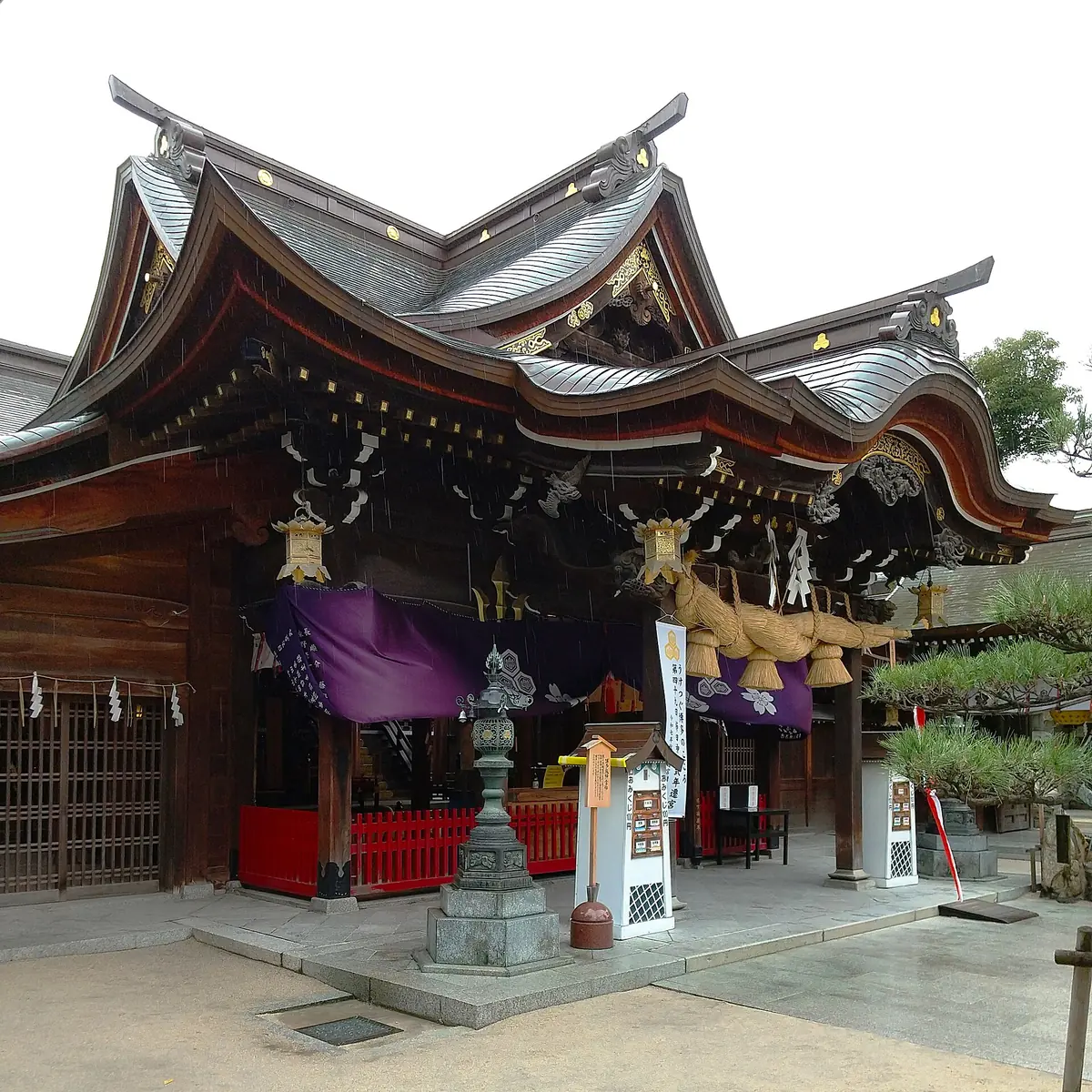
Kushida Shrine is not a reconstructed sightseeing set. It is the active tutelary shrine of Hakata, woven into neighborhood worship, seasonal observances and the Hakata Gion Yamakasa festival. The compact precinct makes a short visit possible, but its meaning comes from the continuing religious life around the worship hall rather than from the number of buildings a visitor can photograph.
Approach the site as a shrine first and a landmark second. Ceremonies, worshippers and shrine staff take priority over a sightseeing route, and an ordinary weekday can feel very different from New Year, Setsubun or the July festival period. Posted instructions and directions given on site override any generic route described here.
- Best for: Hakata history, Shinto culture and a compact central-city visit.
- Typical pace: slow enough to worship and notice the precinct details.
- Main trade-off: small grounds, but large seasonal changes in crowding and circulation.
- Planning rule: check current shrine and event information before a festival-period visit.
history
Read the Shrine's History as Tradition and Civic Memory
Official Fukuoka tourism sources describe a foundation tradition dating to 757 and identify Kushida Shrine as Hakata's principal guardian shrine. They also connect the present main hall to Toyotomi Hideyoshi's late-sixteenth-century reconstruction of Hakata. These accounts explain why the shrine is inseparable from the merchant district's memory, but very early dates should be understood as shrine and local tradition rather than as a complete archaeological chronology.
The precinct also carries layers of later history. The large ginkgo near the entrance is treated as a sacred local landmark and designated natural monument, while monuments and festival objects connect the site with Hakata's urban story. A useful visit therefore moves beyond a single “oldest” claim: look for how worship, trees, architecture and annual ritual preserve different kinds of continuity.
- Foundation: traditionally placed in 757 by official local accounts.
- Reconstruction: associated with Hideyoshi's rebuilding of Hakata.
- Local role: guardian shrine and a focus of Hakata community identity.
- Interpretation: distinguish religious tradition from independently dated material evidence.
highlights
What to Notice Around the Compact Precinct
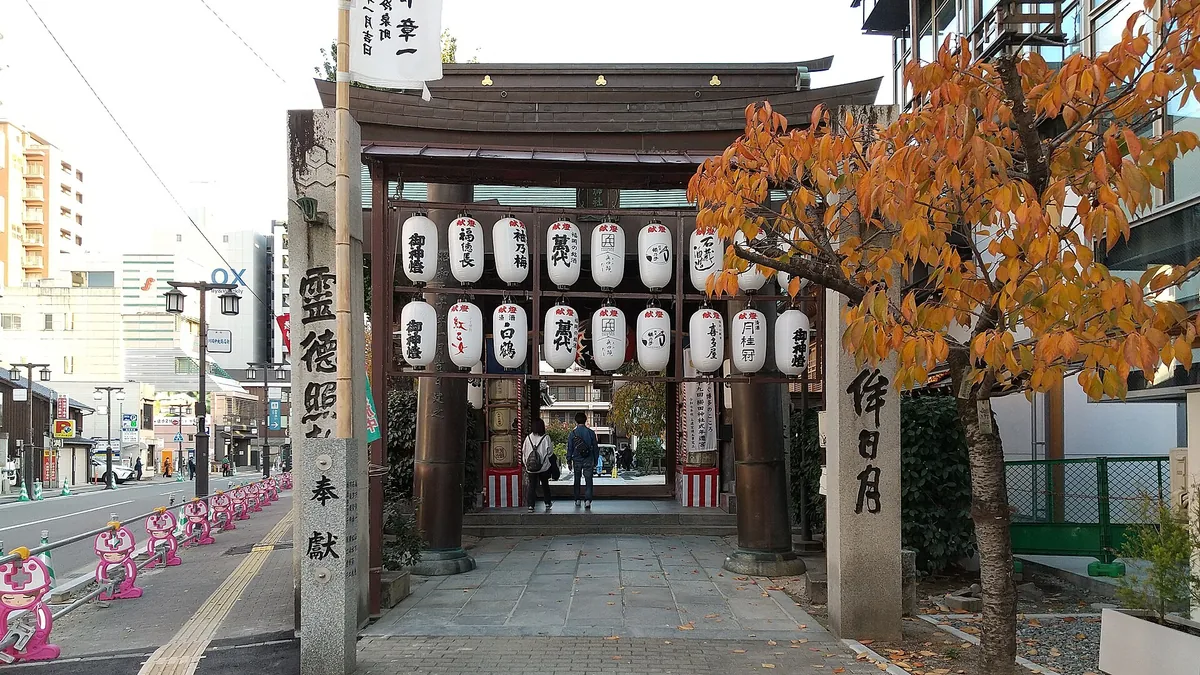
Begin with the relationship between the entrance, sacred ginkgo and worship hall rather than rushing directly to the largest object. Official city material highlights the ginkgo, architectural carvings, a zodiac direction marker and strength stones associated with sumo culture. These details are close together, so a deliberate circuit reveals more than repeated passes made only for photographs.
A decorative kazariyama float is usually the most immediately striking festival object. Official guidance says it is normally displayed through much of the year but is absent during part of the preparation cycle, so do not promise yourself a particular display without checking. The Reisen Tsuru well is another recognized feature; current official city guidance says its water is not potable, regardless of older longevity traditions attached to it.
- Worship hall: the religious center of the visit, not merely an architectural backdrop.
- Sacred ginkgo: a living landmark at the entrance side of the grounds.
- Kazariyama: confirm its current display status before making it the purpose of the trip.
- Reisen Tsuru well: observe the feature, but do not drink the water.
etiquette
Worship Respectfully Even If It Is Your First Shrine
JNTO's general shrine guidance recommends a small bow at the entrance, keeping away from the exact center of the approach where practical, cleansing at the water pavilion when it is operating, and following the familiar two-bows, two-claps and one-bow pattern at the worship area. Local signs or temporary ritual arrangements always take precedence, and sincere quiet behavior matters more than performing every movement perfectly.
Do not block the offering area while reading instructions or arranging a group photograph. Keep voices low, avoid touching sacred objects, and give ceremonies and worshippers space. Photography is not an automatic right throughout a religious site: observe posted restrictions, avoid photographing people without consent and put the camera away whenever staff or the atmosphere indicates that worship should remain private.
- Pause before entering and let worshippers pass.
- Use purification facilities only as currently directed.
- At the worship hall, keep the central space moving.
- Follow local photography signs and never enter restricted areas.
planning
Plan a 20–40 Minute Regular Visit, Then Add Buffer
For an ordinary visit, this database uses 20–40 minutes as an editorial planning range, not an operator-published average. Enter calmly, orient yourself around the sacred tree and main approach, complete a respectful worship visit, then inspect the festival and historical details that are available. Visitors seeking a goshuin or charm should allow additional time and confirm current counter arrangements rather than assuming that grounds access and office service share the same schedule.
The estimate expands quickly during ceremonies, school holidays, New Year and festival preparations. It can also contract if part of the precinct is reserved or a display is temporarily absent. Build the shrine into a Hakata Old Town walk rather than treating a precise departure time as guaranteed, and keep separate admission or operating conditions for any museum-style facility distinct from the open precinct.
- Focused worship and overview: about 20 minutes in quiet conditions.
- Unhurried details and photographs: about 30–40 minutes.
- Goshuin, charms or special displays: add a flexible queue allowance.
- Festival or ceremony days: abandon the normal estimate and follow current guidance.
access
Choose the Station That Fits the Rest of Your Route
Kushida Shrine Station on the Nanakuma Line is the most direct rail approach. The official 2026 Yamakasa page described the shrine as roughly two minutes on foot from the station, while Gion Station on the Airport Line and Nakasu-Kawabata can work when they fit the preceding or next stop better. Check the current exit map because the shortest route depends on which side of the precinct you want to reach.
From Hakata Station, the Nanakuma Line removes the need for a long surface walk; from Tenjin, either subway or a connected central-city walk can make sense. During festival events, road controls, spectator flows and special transport arrangements can invalidate an otherwise simple route. Use the dated event page and live operator information on the day rather than copying a previous year's timetable.
- Shortest rail approach: Kushida Shrine Station on the Nanakuma Line.
- Airport Line alternatives: Gion or Nakasu-Kawabata, depending on the itinerary.
- Best walking context: combine the shrine with Hakata Old Town or Kawabata.
- Festival rule: expect temporary circulation and transport changes.
seasonality
Treat Hakata Gion Yamakasa as a Different Kind of Visit
Kushida Shrine is the ritual center of Hakata Gion Yamakasa, not simply a convenient viewing point. The dated official 2026 program ran through the first half of July and culminated in early-morning events connected with the shrine. Practices, display locations, course controls and transport measures are operational facts that must be checked for the specific year; this page does not convert the 2026 timetable into a permanent schedule.
A festival-period visit may mean barriers, rehearsals, very early starts, dense spectators and limited freedom to circulate. The experience can be extraordinary for travelers who understand the ritual and accept the logistics, but it is a poor time for someone seeking a quiet architectural visit. If the festival itself is not the priority, choose another date and use the year-round interpretive features to understand its relationship to the shrine.
- Festival-focused traveler: read the current official program before choosing a date.
- Ordinary shrine visitor: avoid assuming normal access during preparation and event days.
- Photography: do not obstruct participants, worshippers or safety routes.
- Transport: verify special trains, road controls and the last practical return option.
seasonality
Expect Short Distances but Strong Seasonal Crowd Changes
The shrine's central location makes it easy to insert into a city itinerary, yet that convenience also concentrates visitors. Weekday mornings outside major observances are generally the most practical choice for a calm visit, while weekends, New Year worship and festival-linked dates can change both pace and available space. This is planning advice, not live crowd measurement.
Summer brings heat, humidity and the Yamakasa cycle; rain can make stone and paved surfaces slippery and can alter outdoor events. In colder months, daylight and weather are easier to manage than at remote shrines, but seasonal worship can still create queues. Recheck the shrine, city event guide and weather forecast close to the visit instead of relying on a generic “best month.”
- For quiet: choose a non-event weekday and arrive earlier in the day.
- For Yamakasa: accept crowds and plan around the dated official program.
- For wet weather: use footwear with grip and protect time for slower walking.
- For New Year or Setsubun: look for current notices before arrival.
accessibility
Separate Station Accessibility from Shrine Accessibility
Fukuoka City Subway lists elevators between street, concourse and platform at Kushida Shrine Station, along with accessible ticketing equipment and multipurpose toilets. That makes the station a useful starting point for wheelchair users, people with reduced mobility and families with strollers. It does not, however, prove that every entrance, threshold, ritual point or temporary festival route inside the shrine is step-free.
Travelers who need a guaranteed route should inspect the current station exit diagram and contact the shrine or local visitor information about the precinct conditions that matter to them. Keep the visit short in high heat, avoid festival density when maneuvering space is essential, and do not use the sacred well as a drinking-water source. A companion can help with navigation, but staff directions remain authoritative.
- Station: elevators and accessible facilities are officially listed.
- Precinct: verify the exact entrance and surfaces required for your visit.
- Strollers: quieter non-event periods provide more maneuvering room.
- Sensory load: festivals add noise, crowds and rapidly changing circulation.
nearby
Build a Coherent Hakata Old Town Half-Day
Kushida Shrine works best as the cultural anchor of a compact Hakata route. The official city history tour links the area with old-town temples, merchant culture and the Hakata Machiya Folk Museum. Kawabata Shopping Arcade and Canal City sit in different directions nearby, allowing a traveler to move from worship and history toward food, shopping or an indoor rain plan without crossing the city.
Choose one direction after the shrine. For a history-led half-day, continue through Hakata Old Town toward Tochoji and related temple streets. For a lighter central-city sequence, use Kawabata and Nakasu before continuing to Tenjin. Check every museum, temple and commercial facility separately: their hours, admissions and closures are not the same as shrine-ground access.
- History route: Kushida Shrine, Hakata Machiya and selected old-town temples.
- Food and shopping route: Kawabata, Nakasu and Tenjin.
- Rain alternative: combine the shrine with an indoor museum or Canal City.
- Avoid: adding Ohori Park and Momochi to the same short walking block.