01history
Why Tsurugaoka Hachimangu Is Central to Kamakura
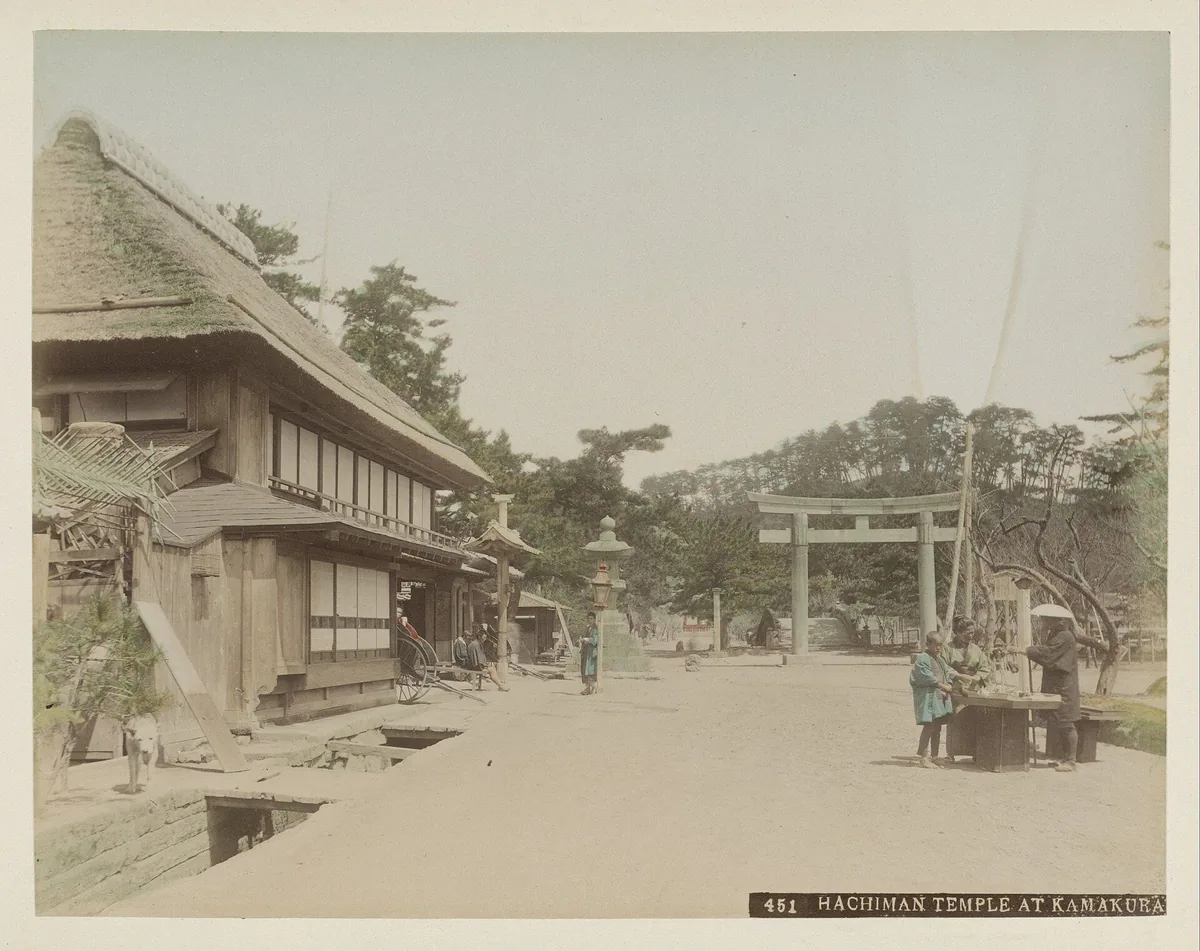
Tsurugaoka Hachimangu is a Shinto shrine and a place for understanding Kamakura as the base of Japan's first samurai government. The shrine traces its beginning to Minamoto no Yoriyoshi, who transferred the divided spirit of Hachiman from Iwashimizu Hachimangu in Kyoto and enshrined it near Yuigahama. Minamoto no Yoritomo moved the shrine to its present position in 1180, the same year he established his political base in Kamakura.
Yoritomo revered the shrine as a guardian of the shogunate, Kamakura and eastern Japan. Ceremonies, martial traditions and public gatherings made the precinct both a religious center and a stage for the new warrior government. That history explains the shrine's scale and axial position, but it should not turn the visit into a checklist of samurai associations: worship continues here, and the historic structures remain part of a living sacred place.
- Origins: Hachiman worship transferred to Kamakura by Minamoto no Yoriyoshi.
- Present site: established by Minamoto no Yoritomo in 1180.
- Historic role: guardian shrine of the shogunate and eastern Japan.
- Present role: active worship, festivals and community life.
history
Wakamiya Oji and the Shape of the Samurai City
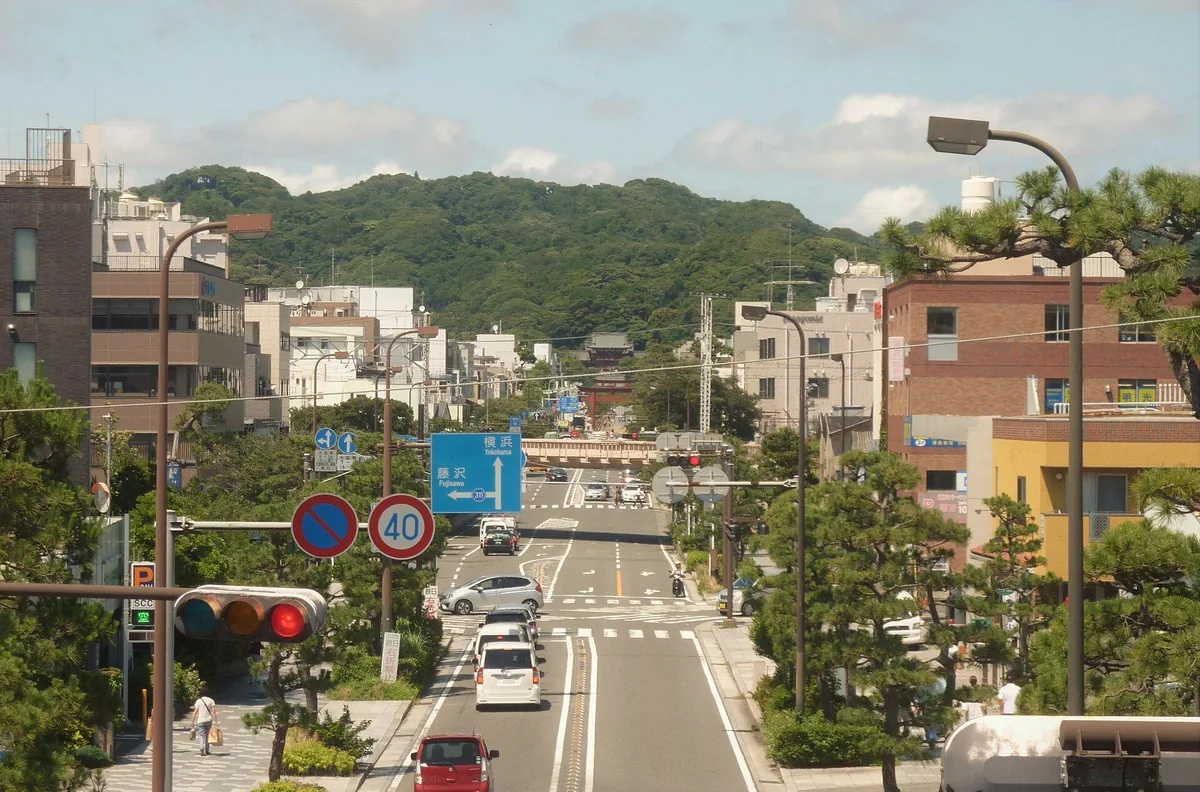
The approach is part of the meaning of the shrine. Wakamiya Oji runs in a straight line for about two kilometers between the Yuigahama coast and Tsurugaoka Hachimangu. The shrine describes it as modeled on Kyoto's Suzaku Oji and built under Yoritomo's direction as the first step in creating the town, as well as a prayer for the safe delivery of his wife, Hojo Masako.
Between the second and third torii gates, the raised central path is called the dankazura. Walking this section makes the city's hierarchy legible: sea, avenue and shrine align toward the Main Shrine rising at the northern end. Komachi-dori offers shops and food nearby, while Wakamiya Oji gives the stronger historical approach. If time allows, arrive by one street and return by the other rather than treating the ten-minute station walk as dead transit time.
- Wakamiya Oji links the shrine and the coast.
- The avenue became Kamakura's central urban axis.
- The dankazura is the raised shrine approach between the second and third torii gates.
- Use the approach to understand the shrine before entering.
experience
A Realistic Route Through the Shrine Grounds
Enter through the third torii and begin with the lower precinct. Genpei Pond spreads to both sides of the approach, while the Maiden ceremonial pavilion stands on the main axis. Continue toward Wakamiya and the prayer area below the Great Stone Steps, then climb to the Main Shrine if the steps suit your mobility. From the upper level, the straight approach back through Kamakura becomes visible.
After paying respects, descend carefully and explore one side of the precinct rather than zigzagging between every numbered landmark. A balanced loop can include Shirahata Shrine, the east–west yabusame track and Hataage Benzaiten Shrine on the Genji Pond island. Add Maruyama Inari only if time and energy allow. This is an editorial route, not a prescribed religious circuit; posted signs, ceremonies, conservation work and staff directions always take priority.
- Lower precinct: ponds and Maiden.
- Central axis: Wakamiya, prayer area and Great Stone Steps.
- Upper precinct: Main Shrine and city view.
- Return loop: choose a few subsidiary shrines and landmarks.
- Respect closed or roped areas.
etiquette
How to Visit Respectfully
A shrine precinct is sacred space, including its outdoor paths and wooded areas. Jinja Honcho advises visitors to behave considerately, avoid blocking people who are praying and never enter buildings, fenced areas or roped spaces without permission. Bowing at a torii and using the purification font when it is available are respectful practices. Photography is secondary to worship, so obey local signs and do not photograph ceremonies or people at close range without permission.
The widely used form of worship is to offer a coin if desired, bow deeply twice, clap twice, make a quiet prayer and bow once. Perform it calmly and move aside when finished. An ordinary visit differs from a booked formal prayer. Tsurugaoka Hachimangu receives formal prayer requests at an office below the Great Stone Steps and recommends formal, respectful clothing; its reception window and fee are not general admission rules for the grounds.
- Leave the center of paths and prayer spaces clear.
- Use purification water only when the basin is operating.
- Standard worship: two bows, two claps, one bow.
- Do not enter shrine buildings without an invitation.
- Check photography signs.
highlights
Genpei Pond, Maiden and Subsidiary Shrines
The lower grounds reward a slower look. Genji Pond and Heike Pond face one another near the entrance. The shrine associates their island counts with prosperity and decline in the Genpei story, while cherry blossom in spring and red and white lotus in summer give the ponds a seasonal identity. Hataage Benzaiten Shrine stands on an island in Genji Pond; nearby Masako Stone is connected with prayers for marital harmony.
The Maiden is not merely a photogenic pavilion. It occupies the site where shrine tradition remembers Shizuka Gozen dancing and now hosts ceremonies and weddings. Shirahata Shrine enshrines Minamoto no Yoritomo and Sanetomo, while Maruyama Inari is identified by the shrine as the precinct's oldest surviving building, dating to the Muromachi period. Choose two or three of these places and read their roles instead of trying to photograph every structure.
- Genpei Pond: history, spring blossom and summer lotus.
- Hataage Benzaiten Shrine: on an island in Genji Pond.
- Maiden: ceremonial pavilion on the central approach.
- Shirahata Shrine: associated with Yoritomo and Sanetomo.
- Maruyama Inari: the precinct's oldest surviving building.
highlights
Treasure Hall and Tsurugaoka Museum Are Separate Visits
The Treasure Hall and Kamakura Bunkakan Tsurugaoka Museum should not be confused. The Treasure Hall is in the western corridor beyond the Main Shrine gate and displays sacred objects and historical materials connected with Tsurugaoka Hachimangu. It has its own admission and may close while exhibits are being changed, so reaching the upper precinct does not guarantee entry.
The museum is a separate cultural facility beside the lower grounds. It opened in 2019, succeeding the former Museum of Modern Art Kamakura, and presents exhibitions about Kamakura's history, culture and environment. As verified on July 18, 2026, its operator lists standard hours of 10:00 a.m.–4:30 p.m., calendar-dependent Monday and exhibition-change closures, and admission that varies by exhibition. Check the current exhibition and calendar because neither facility follows the shrine gate schedule.
- Treasure Hall: sacred objects beside the Main Shrine.
- Tsurugaoka Museum: changing exhibitions in the lower precinct.
- Each facility has separate admission.
- Exhibit changes can create closures.
- Budget separate time rather than assuming both fit into a one-hour visit.
access
Access, Gate Hours and How Long to Allow
The official access page places Tsurugaoka Hachimangu about ten minutes on foot from the east exit of JR Kamakura Station and about ten minutes from Enoden Kamakura Station. Walking is the practical default for most visitors and lets you experience Wakamiya Oji or Komachi-dori. Driving adds city-center traffic and parking uncertainty; if a car is necessary, recheck the shrine's current access and parking notices rather than relying on stored prices or capacity.
As verified on July 18, 2026, the shrine lists gate hours of 6:00 a.m.–8:00 p.m. year-round. Treat that as the outer operating window, not a promise that prayer desks, amulet offices, museums, gardens or every building will be open. Allow about 45–75 minutes for the main grounds, with 60 minutes as a useful comparison value. Add at least 30–60 minutes for a museum or Treasure Hall visit and extra buffer during ceremonies or peak periods.
- JR Kamakura Station east exit: about ten minutes on foot.
- Enoden Kamakura Station: about ten minutes on foot.
- Main precinct: approximately 45–75 minutes.
- Museum or Treasure Hall: allow additional time.
- Recheck all operational details before travel.
accessibility
Stairs, Mobility, Strollers and Family Pacing
The defining physical obstacle is the Great Stone Steps leading to the Main Shrine. The lower precinct contains broad approaches and many important sights, but surfaces, bridges, thresholds and event barriers can still affect movement. The official English visitor pages do not promise a completely step-free Main Shrine route. Travelers who cannot use the stone steps should plan a meaningful lower-grounds visit and contact the shrine before travel for current assistance and route information.
Families can keep the visit manageable by choosing the ponds, Maiden and one subsidiary shrine before deciding whether to climb. Hold children close near water, busy crossings and ceremonies, and avoid using a stroller as a way to push through dense crowds. Heat, rain and festival circulation can increase the effort. Rest areas are shown on the shrine's grounds guide, but their availability and seating should be checked on the day.
- Main Shrine access involves the Great Stone Steps.
- Do not assume the entire precinct is step-free.
- The lower grounds still contain major features.
- Contact the shrine for current mobility assistance.
- Use a shorter route when heat, rain or crowds increase the load.
seasonality
Seasons, Annual Festival and Crowd Trade-Offs
Seasonal interest is spread across the grounds. Cherry blossom appears around Genpei Pond in spring, red and white lotus flowers in summer, and autumn color around Yanagihara-shinchi Pond. The peony garden has its own flowering periods, entrance conditions and schedule. These natural highlights are not guaranteed on a particular date, so use current bloom information and weather rather than treating a calendar month as a promise.
The shrine's annual festival runs from September 14 through 16. Its current official program describes a procession along Wakamiya Oji on September 15 and yabusame horseback archery in the grounds on September 16. New Year is another major worship period. Festivals offer context unavailable on an ordinary day but also bring crowding, controlled circulation and restricted views. Verify the current notice, arrive early and keep routes flexible rather than planning a tight transfer immediately afterward.
- Spring: cherry blossom around the ponds.
- Summer: lotus and hot, exposed walking conditions.
- Autumn: foliage and the September annual festival.
- New Year: major worship crowds and special arrangements.
- Recheck event dates and access controls.
nearby
Nearby Combinations and Common Planning Mistakes
For a compact central-Kamakura route, walk from the station along Wakamiya Oji, visit the main shrine precinct, and return through Komachi-dori. Travelers focused on samurai history can continue north toward Kenchoji and Kita-Kamakura, while those prioritizing the Great Buddha and Hasedera should return toward the station and use the Enoden rather than assuming all three attractions form one short walking cluster. Pick one extension to preserve time for worship and interpretation.
Common mistakes are treating the gate schedule as the hours for every facility, arriving too late for a museum or Treasure Hall, underestimating the Great Stone Steps, and trying to cover every numbered landmark in one pass. Another is planning around a festival without allowing for crowd controls. Check the shrine notice, museum calendar and transport status on the travel date, then decide whether this is a focused one-hour visit or a half-day exploration of central and northern Kamakura.
- Compact loop: Wakamiya Oji, shrine grounds and Komachi-dori.
- History extension: continue north only with adequate time.
- Hase extension: use the Enoden rather than forcing a long walk.
- Do not equate gate hours with facility hours.
- Choose depth over collecting every landmark.