01history
A Hillside Temple Centered on Kannon
Kamakura Hasedera is an active Buddhist temple spread across Kannon-zan hill. Its principal image is an Eleven-headed Kannon standing 9.18 meters high, which the temple describes as one of Japan's largest wooden Buddhist statues. Hasedera is also the fourth temple of the Bando Thirty-three Kannon pilgrimage. The gardens and sea view therefore surround a place of worship rather than a scenic park.
The temple tradition dates its foundation to 736. According to Hasedera's legend, two Kannon images were carved from one sacred tree in 721: one remained in Nara, while the other reached present-day Kanagawa after being set into the sea. Treat this as a foundation tradition, not a documented travel chronology. It also explains why searches must distinguish Kamakura Hasedera from Nara Hasedera.
- Official name: Kaikozan Jishoin Hasedera.
- Principal image: a 9.18-meter Eleven-headed Kannon.
- Pilgrimage role: fourth temple of the Bando Thirty-three Kannon circuit.
- The precinct combines worship, gardens, cultural displays and coastal views.
highlights
Kannon-do Hall and the Kannon Museum
Kannon-do is the essential interior stop because it enshrines the principal Eleven-headed Kannon. The temple says the hall has been rebuilt repeatedly; the building damaged in the 1923 Great Kanto Earthquake was replaced by the present reinforced-concrete hall in the 1980s. Enter quietly and give the image time. Official etiquette prohibits photography and video inside Kannon-do.
Next door, the Kannon Museum explains Kannon belief and preserves temple treasures through permanent and changing displays. It is a separate paid facility, not part of the basic temple ticket. The museum publishes its own hours and closure calendar and may close between exhibitions or for inspections. History-focused travelers should allow additional time; on a short circuit, complete the worship hall and upper grounds before deciding whether the museum fits.
- Prioritize Kannon-do even on a short visit.
- Do not photograph or film inside Kannon-do.
- Treat the museum as a separate admission and timing decision.
- Check the museum calendar for temporary exhibition-change closures.
highlights
Lower Garden, Jizo-do and Benten-kutsu Cave
The lower precinct rewards a slower start. Near the pond and garden are Benten-do, Daikoku-do and the Shoin, whose dry landscape garden represents flowing water with stone and gravel. Jizo-do appears as the route begins to rise, surrounded by rows of small Jizo figures. These are religious spaces and offerings, not decorative props; observe without blocking people who have come to pray.
Benten-kutsu is a rock-cut devotional cave associated by temple tradition with Kobo Daishi. Images of Benzaiten and attendant figures are carved into its walls, and a final chamber receives small votive figures. The cave is an optional branch of the visit, not a required shortcut to the upper grounds. Its enclosed, carved-rock setting is different from the open garden, so assess conditions at the entrance, follow posted directions and turn back if the space is unsuitable for anyone in the group.
- Lower precinct: pond garden, Benten-do, Daikoku-do and Shoin garden.
- Jizo-do is reached as the route begins climbing.
- Benten-kutsu is a devotional cave, not an amusement attraction.
- Allow worshippers room around halls, images and offerings.
experience
Upper Precinct, Scriptures and the Coastal View
The climb leads to Kannon-do, Amida-do, the bell and Kyozo scripture repository. Hasedera's original 1264 bell, designated an Important Cultural Property, is now in the museum; the belfry holds a later replacement. Kyozo has a rotating scripture shelf, but the operator limits the days visitors may turn it. Follow signs rather than assuming every religious object is interactive.
The observation platform and Kaiko Terrace look across Kamakura toward the sea and Yuigahama. Seating makes this a natural pause, and Kaikoan restaurant also faces the coast. Rain, haze and seasonal vegetation change the view. The Prospect Path continues above this level and becomes the Hydrangea Path during bloom season, adding a separate stair-heavy loop.
- Upper precinct: Kannon-do, Amida-do, belfry, Kyozo and museum.
- Only operate religious objects when signs explicitly permit it.
- Use the terrace as a rest point before any additional path.
- Treat sea visibility as weather-dependent.
experience
A Practical Route and How Long to Allow
Begin at the main gate and lower garden, visit Benten-do and the cave if appropriate, then pass Jizo-do while climbing. Continue to Amida-do and Kannon-do, pause at the observation platform, and add Kyozo, the museum or Prospect Path according to interest and mobility. Returning through the lower precinct completes a logical loop.
Use 60 minutes as the baseline for the grounds, matching the operator's representative guided route but not guaranteeing a duration. Worship, the museum, a meal, sutra copying or a seasonal path extend the stay. The shorter official sutra-copying option alone takes about 30 minutes; longer copying and Buddha tracing require much more time. Flower-season ticket slots and queues need an additional buffer.
- Baseline grounds visit: approximately 60 minutes.
- Add time for the museum, cave, seasonal path or a meal.
- Sutra copying and Buddha tracing are separate activities, not quick add-ons.
- Follow current one-way routes or staff instructions when posted.
access
Access, Opening Periods and Admission
Hasedera is at 3-11-2 Hase, about five minutes on foot from Hase Station on the Enoden Line. The operator also lists a five-minute walk from Hase Kannon bus stop for services from Kamakura Station. The temple has a small paid car park with no reservations; listed capacity does not guarantee availability in flower seasons or on busy weekends.
As verified on July 18, 2026, the temple opens 8:00 a.m.–5:00 p.m., with last entry at 4:30 p.m., from July through March. April through June closes at 5:30 p.m., with last entry at 5:00 p.m. Basic admission is ¥400 for adults and ¥200 for children aged 6–11. Hours, fees, parking, museum admission and seasonal supplements are volatile; recheck official pages.
- Hase Station: about five minutes on foot.
- Hase Kannon bus stop: about five minutes on foot.
- Current basic adult admission: ¥400.
- Last entry is earlier than the stated closing time.
- Do not depend on the temple car park being available.
seasonality
Seasonal Flowers and the Hydrangea Entry System
Hasedera's garden changes throughout the year. The operator lists plum and early spring flowers; cherry, wisteria and peony in spring; hydrangea and iris around June; lotus and water lily in summer; and foliage plus later flowers in autumn and winter. These are representative periods, not bloom promises. Check current flower reports because weather and pruning shift timing.
Hydrangea season requires special planning. Official 2026 guidance used a limited, timed Hydrangea Path ticket in addition to ordinary admission during the charged bloom period. Advance reservations and same-day tickets were offered, but could sell out. It documented about 80 steps to the entrance and another 130 on the path, without ramps. This was a dated system, not a permanent rule: confirm dates, price, reservations, bloom status and physical requirements for the actual year.
- The garden has seasonal interest beyond June.
- Bloom reports are more useful than fixed calendar promises.
- A basic temple ticket may not include the Hydrangea Path in peak season.
- A timed reservation may still require buying ordinary admission on arrival.
- Recheck the system every year before committing to a June itinerary.
etiquette
Temple Etiquette and Photography Rules
Hasedera asks visitors to keep voices low inside halls, avoid mobile-phone use and pray silently with hands together. Unlike at a Shinto shrine, clapping is not part of Buddhist temple practice. Follow washbasin signs if water use is suspended or altered. Morning service in Kannon-do also reminds visitors that it is a functioning worship space.
Photography and video are prohibited inside Kannon-do and the Kannon Museum. Popular images online do not override that rule. Other areas may have temporary signs, ceremonies or people praying, so check locally and keep paths clear. The Shoin's sutra-copying room has separate no-photography and quiet rules. Commercial work requires a different permission process.
- Keep quiet and silence mobile devices in halls.
- Pray with hands together; do not clap.
- No photography or video inside Kannon-do or the Kannon Museum.
- Follow temporary signs around ceremonies and restricted areas.
- Protect other visitors' privacy and keep circulation routes clear.
accessibility
Stairs, Accessibility and Visiting with Children
Hasedera is a multi-level hillside precinct, so not every highlight is step-free. Official 2026 Hydrangea Path guidance specified about 80 steps to its entrance and another 130 on the path, with no ramps. Travelers with limited stamina, balance concerns or small children should treat it as optional. Contact the temple when access to a particular hall or viewpoint is essential.
Stroller parking is available just inside the main gate; do not assume a stroller suits the full climbing route. Restrooms are on the grounds, and the one near the car park is described as barrier-free with ostomy facilities. Families can enjoy the garden and terrace without taking every branch. Keep children close in the cave, on steps and at busy viewpoints.
- Expect level changes between lower and upper precincts.
- The peak-season Hydrangea Path is stair-only under the 2026 arrangement.
- Use the designated stroller-parking area.
- A barrier-free restroom is listed near the car park.
- Ask the temple directly about current access to must-see areas.
nearby
Nearby Pairings and Common Planning Mistakes
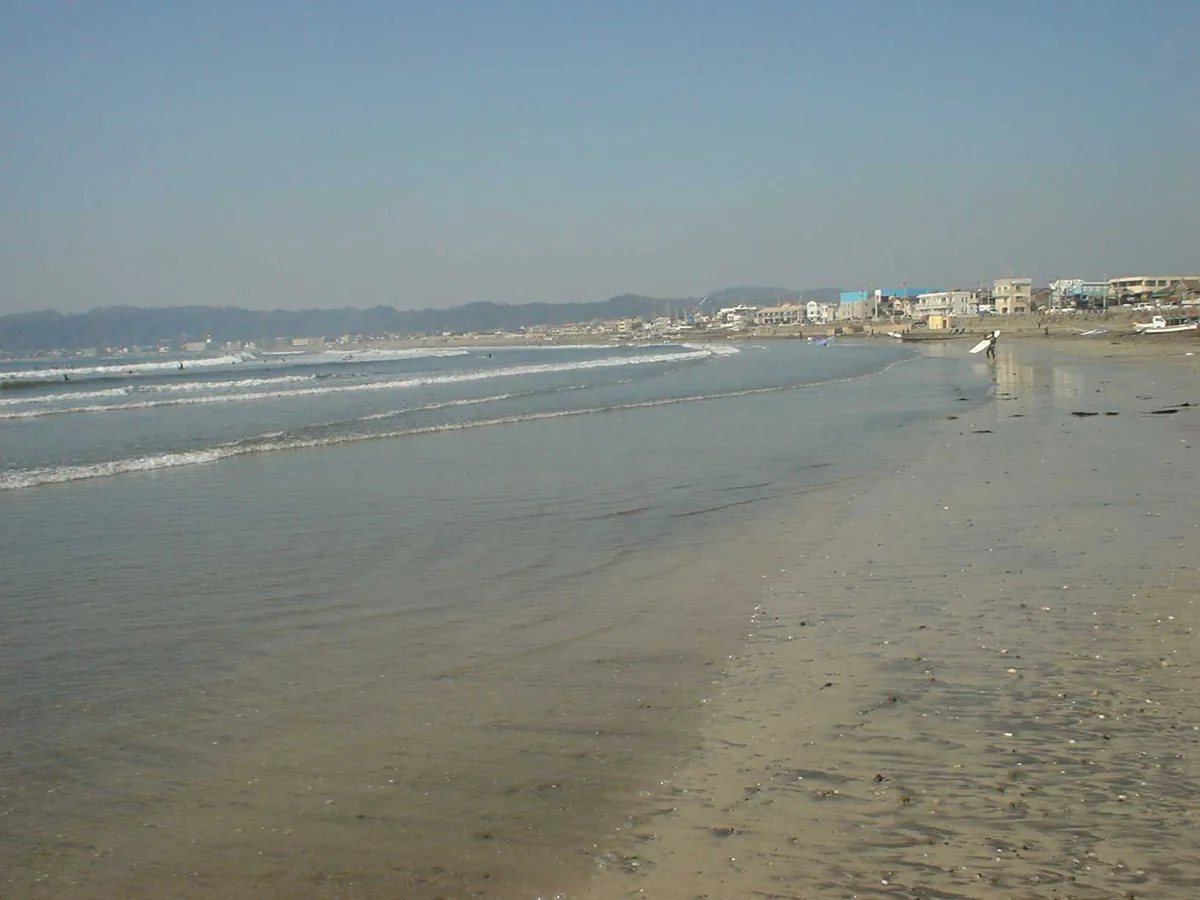
The simplest pairing is Kotoku-in's Great Buddha: both sights use Hase Station and appear in the rail operator's Hase-area guide. Hasedera looks toward Yuigahama, so the coast is another weather-dependent extension. A practical half-day is Hasedera, the Great Buddha, then Hase streets or the beach. Leave time to return to Kamakura Station; not every city sight belongs to one walking loop.
Mistakes include confusing Kamakura Hasedera with Nara Hasedera, budgeting for one hall and treating the precinct as flat. Others are arriving near last entry, assuming museum admission is included, expecting a clear view, photographing inside Kannon-do, or presuming a June ticket covers the Hydrangea Path. Drivers may overestimate the small car park. Build around current temple and transport notices.
- Efficient pairing: Hasedera and Kotoku-in's Great Buddha.
- Weather-permitting extension: Yuigahama and the Hase coast.
- Do not combine distant Kamakura districts without transport time.
- Check last entry, museum status and seasonal ticket rules.
- Confirm that search results refer to Hasedera in Kamakura, not Nara.