Source status

Published records retain source and verification context.

Japan / city

Takayama

高山市

Snow-covered traditional wooden streetscape in Takayama's Sanmachi district
Snow changes the texture and walking conditions of Takayama's preserved Sanmachi streets.Photo by そらみみ via Wikimedia Commons; resized and converted to WebP · Wikimedia Commons (opens in a new tab) · CC BY-SA 4.0 (opens in a new tab)

Takayama is a mountain city known for its preserved streets, morning markets, festival culture and regional museums, with a walkable central area and local bus links to outlying sights.

Recommended stay
12 days
Trip role
main destination
01

Why it fits

A place in the route, not just a pin on the map.

Takayama offers a compact base for exploring the culture of the Hida region. A first visit can combine the city's historic streets with Takayama Jinya and the Miyagawa Morning Market, while local buses connect the station area with Hida Folk Village. The official city model itinerary supports a full day around the main sights, but the longer journey from major cities makes an overnight stay more practical for many travelers. Takayama's mountain setting also shapes the trip: winter can bring snow and ice, the rainy season affects early summer, and spring and autumn festivals create strong seasonal demand. Check current intercity and local transport before travel, especially during festivals, severe weather and winter conditions.

Best when

Best for travelers interested in traditional townscapes, markets, local culture and a slower-paced stay that can be managed mainly on foot and by local bus.

Think twice when

Less suitable for travelers fitting Takayama into a very short major-city itinerary, or for those who do not want to plan around longer transfers, winter snow or festival-period demand.

Decision profile / 02

What changes the trip.

Comparable fields make the trade-offs explicit without creating one overall rank.

Access

150 min

Nagoya Station is the comparison gateway. The Takayama Jinya access page lists about 2 hours 30 minutes from Nagoya to Takayama Station, so this database uses 150 minutes as an editorial planning comparison rather than a guaranteed timetable. Walk or use local buses within the city, and verify current intercity and local services before travel.

From Nagoya Station
Season

spring / autumn / winter

Takayama has cold, snowy winters, a rainy-season period and distinct spring and autumn festival peaks. Monthly suitability values are editorial planning aids based on official climate and event sources, not forecasts or live crowd measurements.

Budget

moderate

Takayama sits in a moderate editorial planning band for this database. Lodging, dining, local transport and admission costs vary by date and itinerary, so confirm current prices before booking.

Crowds

seasonal

Use this profile as a planning signal, then check dated local conditions.

Day-trip fit2/5
Overnight fit5/5
Public transport3/5
Car need2/5
First visit4/5
Family4/5
Solo5/5

Month by month

Three signals across the year.

Weather fit and seasonal value use 5 for a stronger planning signal. Crowd level uses 5 for stronger expected pressure; it is a static editorial signal, not live congestion or a cross-city rank.

Monthly weather fit, seasonal value and crowd level for Takayama. Each factor is shown separately on a one-to-five scale.
FactorJanFebMarAprMayJunJulAugSepOctNovDec
Weather223454333542
Season443543333544
Crowd333533333533

Planning notes / all 12 months

What each month changes.

These are static, source-led planning notes—not forecasts or live crowd reports. Recheck weather, events and operations before travel.

01

January

Weather
2/5
Season
4/5
Crowd
3/5

Very cold winter conditions with seasonal townscape value; snow access needs live checking.

02

February

Weather
2/5
Season
4/5
Crowd
3/5

Very cold late winter with a stable event proxy; transport and snow conditions remain current risks.

03

March

Weather
3/5
Season
3/5
Crowd
3/5

Cold spring transition with moderate precipitation; mountain conditions vary locally.

04

April

Weather
4/5
Season
5/5
Crowd
5/5

Milder spring overlaps major festival interest; dates, access and crowd management need rechecking.

05

May

Weather
5/5
Season
4/5
Crowd
3/5

Comfortable late spring conditions support fit; holiday demand is only an editorial proxy.

06

June

Weather
4/5
Season
3/5
Crowd
3/5

Warm and wetter early summer; current rainfall and trail access are outside this profile.

07

July

Weather
3/5
Season
3/5
Crowd
3/5

Hotter, wet midsummer conditions; live heat and storm warnings require separate checks.

08

August

Weather
3/5
Season
3/5
Crowd
3/5

Peak warmth with holiday activity; this profile does not model daily crowd or transport load.

09

September

Weather
3/5
Season
3/5
Crowd
3/5

Cooler but wetter early autumn; storm impacts are outside the static candidate.

10

October

Weather
5/5
Season
5/5
Crowd
5/5

Comfortable autumn overlaps major festival and foliage interest; timing requires annual review.

11

November

Weather
4/5
Season
4/5
Crowd
3/5

Cool late autumn with seasonal value; snow onset and foliage timing vary each year.

12

December

Weather
2/5
Season
4/5
Crowd
3/5

Cold winter conditions with seasonal context; year-end operations and snow access need checking.

In-depth guide

Know the place before you go.

Detailed, source-led context for planning the visit—not a substitute for current official notices.

01

context

How Takayama Fits Together

Takayama is a very large municipality, but the part most first-time visitors explore is a compact city center. JR Takayama Station and the adjacent Nohi Bus Center form the western gateway. From there, the historic districts lie mainly across the Miyagawa River to the east. The city's full-day model course connects the station, morning market, northern shrine district, preserved streets, city museum and Takayama Jinya without requiring a car.

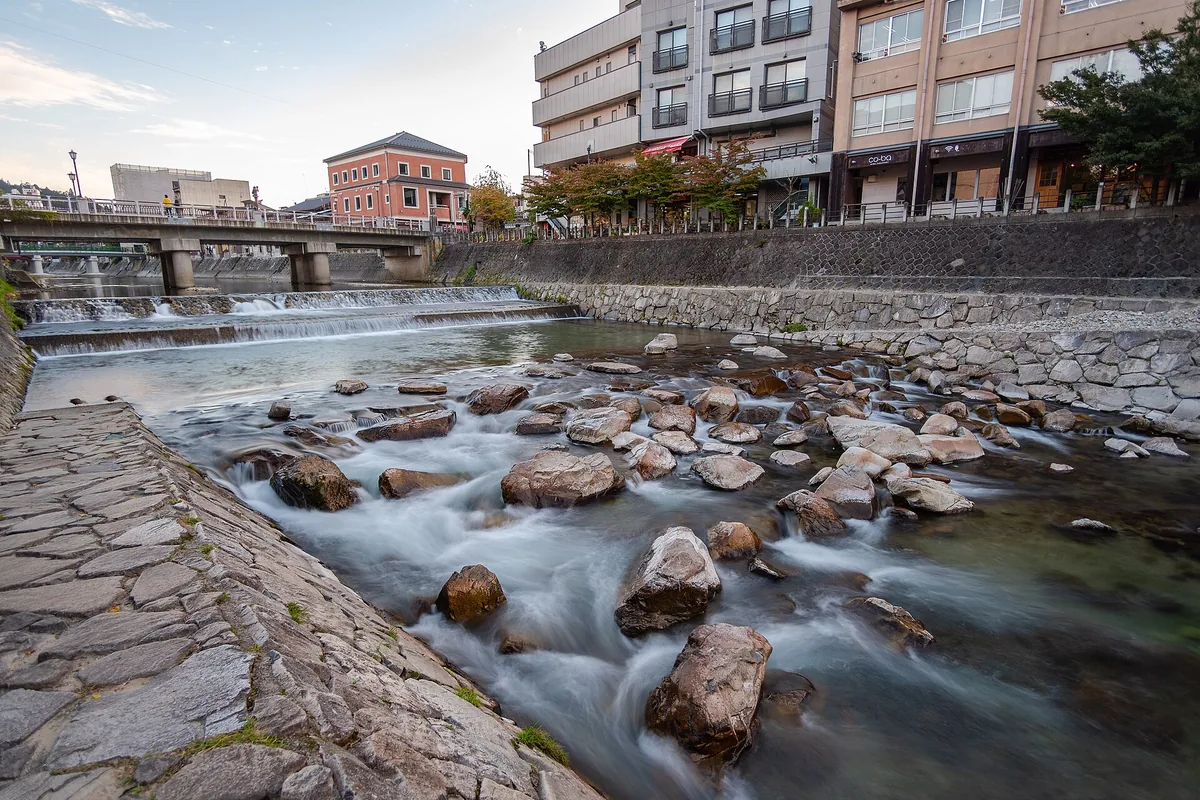
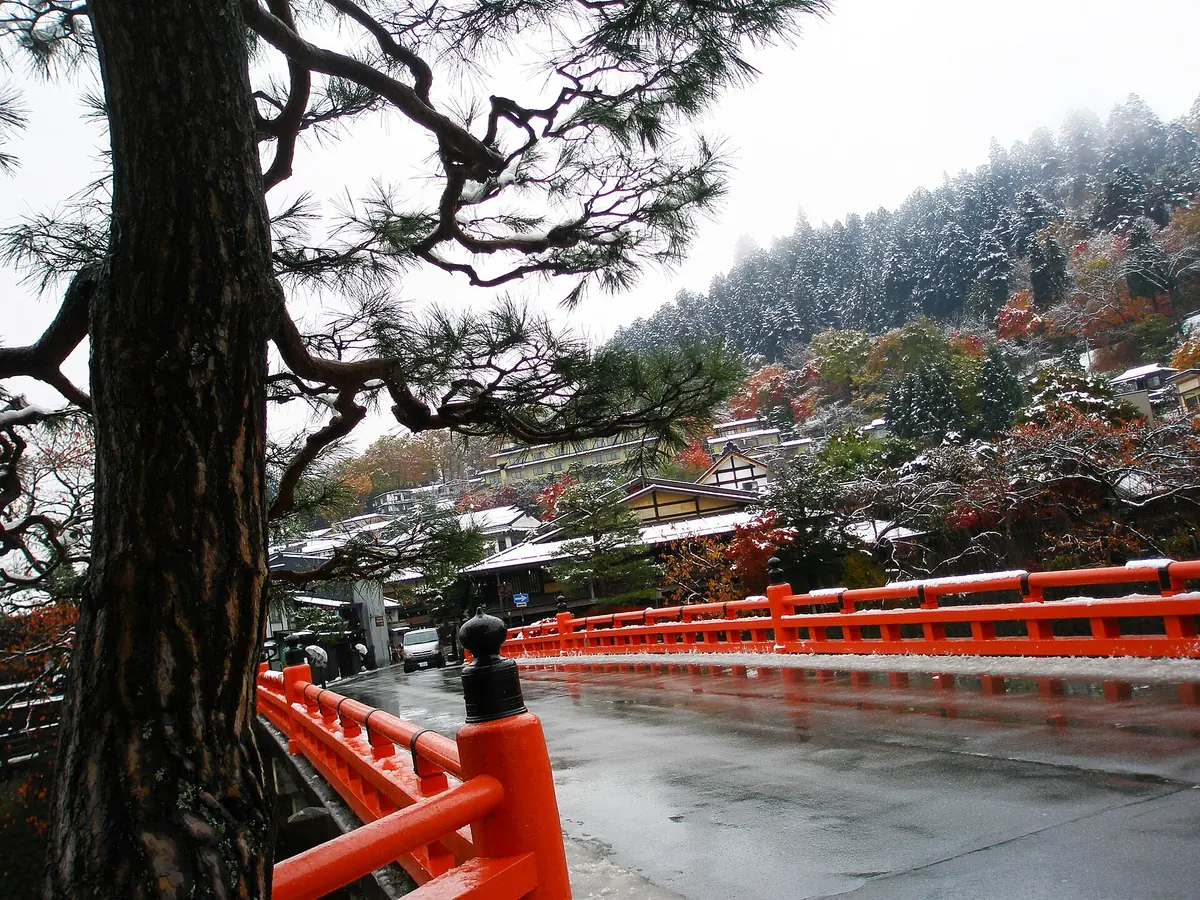
The Miyagawa River is a practical geographic reference. Sanmachi, a well-known preserved merchant quarter, occupies streets on the river's eastern side. Takayama Jinya and the red Nakabashi Bridge sit toward the southern end of the core, while the Miyagawa Morning Market and Shimoninomachi–Ojinmachi quarter extend north. Farther east, the land rises toward the Higashiyama temple area and Shiroyama Park.

Hida Folk Village belongs to a separate sightseeing cluster southwest of the station and is normally reached by local bus. That separation matters when building an itinerary: the preserved center works as one walking loop, while Hida Folk Village needs its own transport and visit block. References to “Takayama” can also include distant mountain and hot-spring districts, so always confirm whether an attraction is in the walkable center or the wider municipality.

  • Use Takayama Station and Nohi Bus Center as the arrival anchor.
  • Use the Miyagawa River to separate the station side from the historic side.
  • Treat Jinya–Nakabashi, Sanmachi and the northern old quarter as connected walking zones.
  • Give Hida Folk Village a separate bus-assisted block.
  • Do not assume every address in Takayama City is near the old town.
02

highlights

Choose the Takayama Area That Matches Your Trip

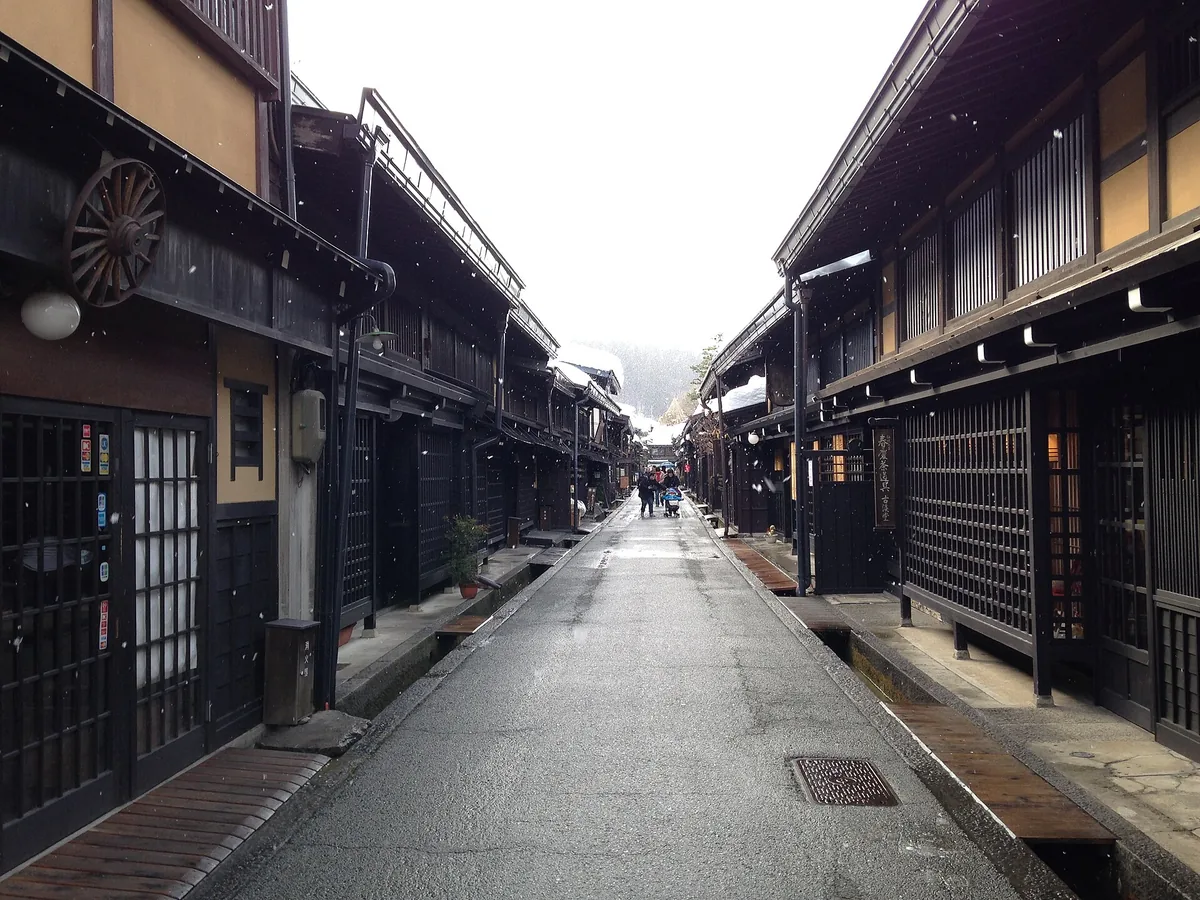
Sanmachi is the recognizable merchant-town setting of wooden lattice fronts, water channels, sake breweries, shops and places serving local food. It is useful for a first visit, but it is not the whole historic city. The streets receive many sightseers during the central part of the day, so an overnight visitor gains a different perspective by returning before group traffic builds or after many daytime businesses close.

North of Sanmachi, Shimoninomachi–Ojinmachi retains more everyday businesses and residences. The city describes it as a less commercialized, lived-in traditional district. Continue toward the Miyagawa Morning Market and the Hachimangu side for a northern loop. South of Sanmachi, Nakabashi and Takayama Jinya form a compact cluster that pairs naturally with the Jinya-mae market.

The station and bus-center zone is the practical base for travelers with luggage or early departures. Higashiyama, east of the commercial streets, offers a quieter temple walk but adds distance and elevation. Hida Folk Village is the choice for understanding rural Hida architecture and mountain life rather than merchant-town history. Selecting two or three coherent zones produces a better day than crossing the center repeatedly.

  • Sanmachi: preserved merchant streets, food, crafts and sake-brewery façades.
  • Shimoninomachi–Ojinmachi: a quieter traditional district with local daily life.
  • Jinya–Nakabashi: government history, a morning market and a central landmark.
  • Miyagawa and the northern quarter: riverside market and traditional streets.
  • Hida Folk Village: rural architecture in a separate bus-accessed cluster.
03

planning

A Realistic One-Day Takayama Itinerary

Start with one morning market, not both by default. Miyagawa gives you a longer riverside walk, while Jinya-mae makes the transition into Takayama Jinya almost immediate. Stall participation can fall in poor weather and winter, and the markets finish around midday under the current city guidance, so they belong at the beginning of the day. Check the latest operating information rather than planning a late visit.

Continue through Takayama Jinya and Nakabashi into Sanmachi. Allow roughly 45–75 minutes for Jinya as an editorial planning estimate, more if you join a guide or read displays closely. Explore Sanmachi without treating every shop as a compulsory stop, then use the Takayama Museum of History and Art to connect the streetscape with the city's merchant, craft and festival history.

In the later afternoon, choose either the northern shrine district or a shorter section of Higashiyama. Trying to add Hida Folk Village to this full historic-center loop usually turns the day into a timetable exercise. A one-day visitor with an evening departure should also protect enough time to return to the station, retrieve luggage and absorb seasonal bus or walking delays.

  • Early morning: Miyagawa Market or Jinya-mae Market.
  • Morning: Takayama Jinya, Nakabashi and the southern old-town cluster.
  • Midday: Sanmachi, with a planned meal rather than continuous snacking.
  • Afternoon: city museum, then either the northern district or a short eastern walk.
  • Editorial walking-day estimate: about seven to eight hours excluding intercity travel.
04

planning

How to Use Two Days Without Repeating the Old Town

Use the first day for the central history loop: a morning market, Takayama Jinya, Nakabashi, Sanmachi and the city museum. Continue north if energy and opening times allow. Staying overnight lets you revisit the preserved streets outside the busiest daytime period, while avoiding the weak itinerary pattern of arriving from a distant city, rushing the center and leaving again the same afternoon.

On the second morning, take the local sightseeing bus to Hida Folk Village. The open-air site contains more than 30 buildings across a large, sloping property, so allow roughly 90–150 minutes as an editorial estimate. Demonstrations and hands-on activities vary by date. Check the city visitor page and current bus timetable before departure instead of building the day around an assumed event.

After returning to the center, choose either the northern preserved quarter or the Higashiyama Walking Course. The complete Higashiyama promenade is about four kilometers according to the city, so it should not be treated as a quick detour. Families, winter visitors and anyone with limited walking capacity can replace it with a shorter riverside circuit, a museum or additional time in the old quarter.

  • Day 1: markets, Jinya, Sanmachi and the central history loop.
  • Early evening: experience the center after much of the daytime traffic subsides.
  • Day 2 morning: Hida Folk Village by current local bus service.
  • Day 2 afternoon: Higashiyama or the northern traditional quarter.
  • Keep a weather-adjusted indoor alternative for the second afternoon.
05

access

Getting to Takayama and Moving Around

Nagoya is a common rail gateway for many itineraries. The official Takayama Jinya access guide uses approximately two and a half hours from Nagoya to Takayama on the Limited Express Hida as a planning frame. Tokyo and Osaka journeys usually add a Shinkansen connection at Nagoya, while Toyama can provide a northern rail approach. These are orientation patterns, not promises of a specific connection; use the current railway timetable for the travel date.

Highway and regional buses connect Takayama with gateways including Nagoya, Shinjuku, Matsumoto, Shirakawa-go and parts of Hokuriku. Reservation rules differ by service. The Nohi Bus Center is beside JR Takayama Station and also handles city, regional and mountain routes. Check the operator's operation-status page close to departure because road closures, snow, congestion and seasonal schedules can change journey times.

Most central sights are reached on foot, but local buses reduce unnecessary walking. Machinami and Takumi services cover parts of the center, while the Sarubobo Bus serves Hida Folk Village and the southwestern attraction area. A car adds little for a central-only itinerary. If driving in winter, the city explicitly warns against normal tires because Takayama roads may be snowy or icy even when conditions at the arrival airport are clear.

  • Rail planning anchor: Nagoya–Takayama on the Limited Express Hida.
  • Bus and rail timetables must be checked for the exact travel date.
  • Station and bus center are adjacent, but allow transfer time.
  • Walk the historic core; use local buses for Hida Folk Village.
  • Winter rental cars require suitable winter equipment and cautious driving.
06

planning

Where to Stay: Station Convenience or Old-Town Atmosphere

Stay near Takayama Station and Nohi Bus Center when transfer reliability matters most. This zone reduces luggage handling and simplifies early buses to Shirakawa-go, Okuhida or other regional destinations. It also works for late arrivals, although the preserved streets are not immediately outside the door. Confirm breakfast hours if you have an early departure rather than assuming a hotel meal and bus connection will fit together.

Stay around Honmachi, Nakabashi or the edge of Sanmachi when evening and early-morning access to the historic center matters more than immediate transport. Lodging here can make the old town feel integrated into the stay, but pedestrian access, taxi availability, parking and meal arrangements vary by property. The northern traditional quarter may suit a quieter itinerary but adds distance from the station.

Ryokan and hot-spring properties outside the center should be chosen for the accommodation experience itself, not described as equally convenient for city sightseeing. Check whether dinner has a fixed arrival deadline and whether a shuttle requires advance booking. Takayama City levies an accommodation tax, whose amount depends on the lodging charge under the current rules; verify how and when the selected property collects it.

  • Station side: transfers, luggage and early departures.
  • Historic-center side: atmosphere and easier dawn or evening walks.
  • Northern quarter: quieter setting with a longer station connection.
  • Outlying ryokan: choose for meals, bathing and the stay experience.
  • Confirm accommodation tax, meal deadlines, parking and shuttle arrangements.
07

seasonality

When to Visit Takayama—and What the Festivals Change

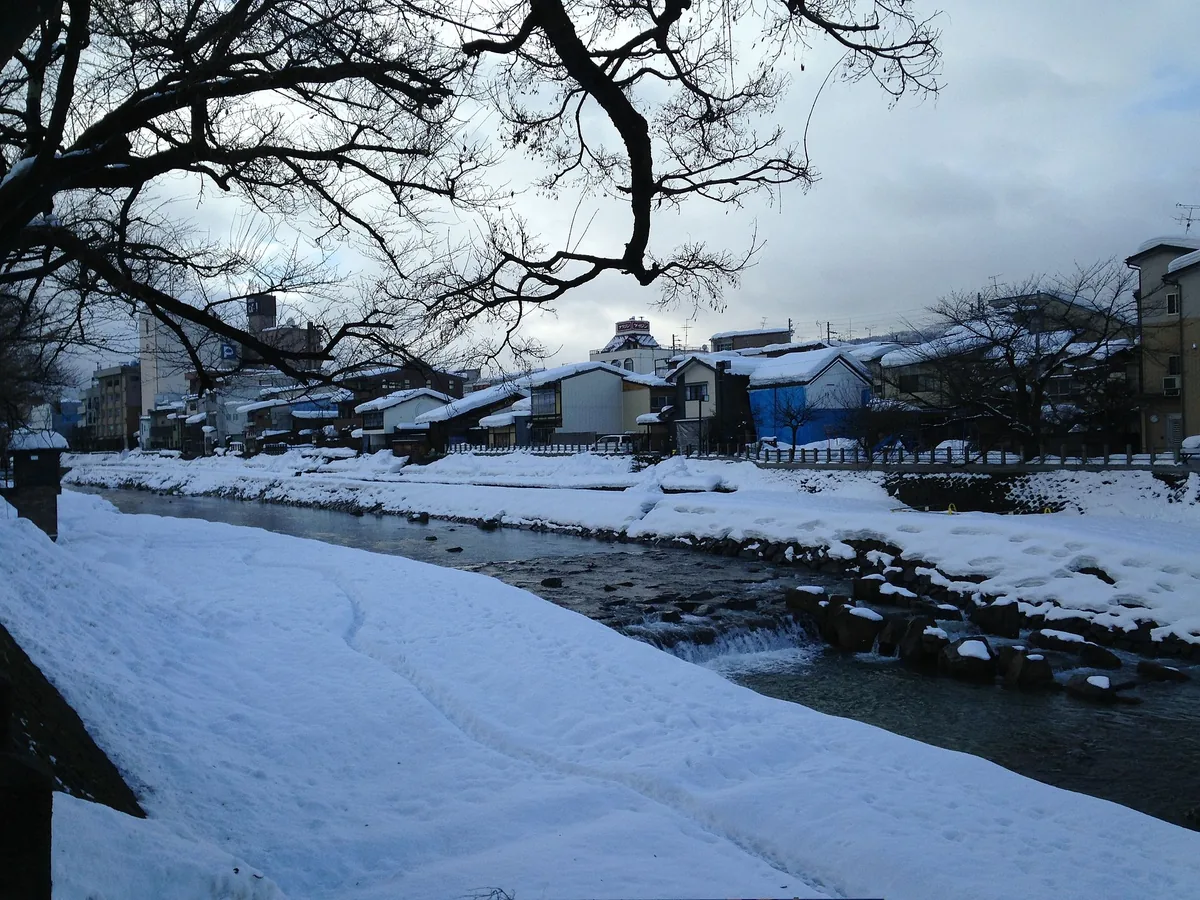
Takayama sits on a plateau more than 500 meters above sea level and has a pronounced difference between day and night. The city advises warm layers in spring and autumn, rain protection during the early-summer rainy season, and serious cold-weather equipment in winter. Snow and ice affect both walking and road travel. Summer days can still be hot, even though nights are generally cooler than in many lower-elevation cities.

The Spring Takayama Festival is held annually on April 14 and 15, while the Autumn Takayama Festival is held on October 9 and 10. The two festivals use different parts of the city and feature processions, decorated floats and performances. Their official pages warn that heavy crowds are expected and that outdoor events can be cancelled rather than postponed when weather makes them unsafe.

Festival dates should be treated as a separate demand season, not simply as ordinary spring or autumn days. Reserve transport and lodging early, study the current traffic-control map and allow routes through the center to change. Outside festival dates, flower, foliage and snow timing varies from year to year. Use climate normals for broad preparation, then check the short-range forecast and operator status shortly before travel.

  • Spring: variable temperatures; festival demand peaks on April 14–15.
  • Early summer: rain protection and flexible outdoor plans.
  • Summer: warm days, strong sun and cooler evenings.
  • Autumn: layers; festival demand peaks on October 9–10.
  • Winter: snow footwear, warm clothing and transport contingency time.
08

accessibility

Planning Takayama with Children or Limited Mobility

Takayama's central cluster can work well for families because distances between Jinya, Nakabashi and Sanmachi are relatively short, but a full north-to-south circuit still becomes a long walking day. Build the route around toilets, indoor rests and one meaningful museum rather than a checklist of every historic building. The Nakabashi Tourist Information Office lists a wheelchair-loan service, but availability should be confirmed directly before relying on it.

Historic architecture creates real access constraints. Takayama Jinya explains that much of its interior is tatami-matted, visitors change to a dedicated wheelchair, and entrance steps or temporary ramps may require assistance. The building is unheated and shoes are removed, which matters for children and visitors sensitive to cold. Review the venue's current guidance before deciding that every member of a group can follow the same route.

Hida Folk Village is a large, sloping outdoor site with more than 30 historic buildings. The city visitor page does not provide a complete step-free route or building-by-building accessibility map, so do not assume that every path or interior will suit a wheelchair or stroller. Contact the facility about current conditions and use the local bus to reduce the approach from the station.

  • Divide the center into shorter southern and northern loops.
  • Confirm wheelchair-loan availability at Nakabashi before relying on it.
  • Read Takayama Jinya's detailed wheelchair and shoe-removal guidance.
  • Ask Hida Folk Village directly about current paths and accessible interiors.
  • Use local buses to reduce walking between separated attraction clusters.
09

nearby

Day Trips from Takayama: Choose One Direction

Shirakawa-go is a straightforward full-day or onward-route extension by bus. Nohi Bus currently describes the trip from Takayama Bus Center as about 50 minutes under normal conditions, with some departures requiring reservations. The operator also warns that congestion, snow and road closures can create major delays. It can continue toward Kanazawa or Toyama, so it often works better as an onward stop than a return trip.

Hida Furukawa is a smaller-scale alternative for travelers who want another historic town without committing to a mountain sightseeing day. Current Nohi route information lists non-reserved regional bus service through Furukawa, and rail may also be available depending on the timetable. Compare the live rail and bus schedules before deciding whether it is a half-day outing or an onward connection.

Kamikochi, Okuhida Onsen-go and Shinhotaka belong to the mountain corridor east of Takayama. Kamikochi service is seasonal and requires a transfer at Hirayu Onsen on the current Nohi pattern. Weather, operating seasons and last departures are decisive. These are full-day commitments from central Takayama; combining a mountain destination with Shirakawa-go on the same day leaves too little resilience for delays.

  • Shirakawa-go: full day or onward connection toward Hokuriku.
  • Hida Furukawa: lighter half-day or regional-town extension.
  • Okuhida and Shinhotaka: full day shaped by weather and bus schedules.
  • Kamikochi: seasonal access with a Hirayu Onsen transfer.
  • Select one corridor and verify the final return before departing.
10

planning

Planning Mistakes That Make Takayama Harder

The first mistake is treating Takayama as a quick stop between long transfers. A late arrival followed by an early departure misses the morning markets and leaves little time for Jinya, Sanmachi or the northern district. If only one calendar day is available, protect a full sightseeing block rather than counting intercity travel as part of the usable visit.

The second is confusing compact central Takayama with the entire municipality. Hida Folk Village needs a separate local-bus block, while Okuhida, Shinhotaka and Kamikochi are regional journeys. Another common error is creating a precise itinerary from old timetable screenshots. Bus reservations, seasonal services, road conditions and last departures must be checked on operator pages for the actual date.

Festival and winter trips need additional planning. Festival streets become crowded, traffic controls alter movement and rain can cancel events without postponement. In winter, ordinary footwear and normal-tire rental cars are unsafe choices. Finally, remember that the preserved districts are living neighborhoods: do not block roads for photographs, enter private property, touch festival floats or leave litter behind.

  • Do not schedule a morning market after intercity arrival.
  • Do not combine the old town, Hida Folk Village and a mountain trip in one day.
  • Do not rely on cached bus times or an assumed seat reservation.
  • Book festival-period transport and lodging well ahead.
  • Prepare proper winter footwear and vehicle equipment.
  • Respect traffic, residents, cultural property and smoke-free rules.

Evidence / 04

Sources and verification

28 sources

  1. Access to Takayama JinyaGifu Prefecture / Takayama Jinya Management Office
  2. Takayama Jinya opening hours and visitor informationGifu Prefecture / Takayama Jinya Management Office
  3. Nakabashi Tourist Information OfficeHida-Takayama Tourism and Convention Bureau
  4. Monthly Normal — TakayamaJapan Meteorological Agency
  5. Takayama monthly weatherJapan National Tourism Organization
  6. From Takayama/Hirayu Onsen to KamikochiNohi Noriai Jidosha Co., Ltd.
  7. Nohi Bus English Home and Operation StatusNohi Noriai Jidosha Co., Ltd.
  8. Route BusNohi Noriai Jidosha Co., Ltd.
  9. Takayama City LineNohi Noriai Jidosha Co., Ltd.
  10. About Takayama and its climateTakayama City / HIDA TAKAYAMA
  11. About Takayama and its climateTakayama City / HIDA TAKAYAMA
  12. Autumn Takayama Festival (Hachiman Matsuri)Takayama City / HIDA TAKAYAMA
  13. For those who want a gentle strollTakayama City / HIDA TAKAYAMA
  14. Hida Folk VillageTakayama City / HIDA TAKAYAMA
  15. How to get to TakayamaTakayama City / HIDA TAKAYAMA
  16. MannersTakayama City / HIDA TAKAYAMA
  17. Miyagawa Morning MarketsTakayama City / HIDA TAKAYAMA
  18. Notice about Accommodation Tax IntroductionTakayama City / HIDA TAKAYAMA
  19. Spring Takayama Festival (Sanno Matsuri)Takayama City / HIDA TAKAYAMA
  20. Takayama FestivalTakayama City / HIDA TAKAYAMA
  21. Takayama main-sites model itineraryTakayama City / HIDA TAKAYAMA
  22. Transportation in TakayamaTakayama City / HIDA TAKAYAMA
  23. Where to stayTakayama City / HIDA TAKAYAMA
  24. Winter driving and normal-tire warningTakayama City / HIDA TAKAYAMA

Keep deciding

Place it beside another destination.

Open comparison