01context
Arashiyama is a district, and the bamboo path is one part of it
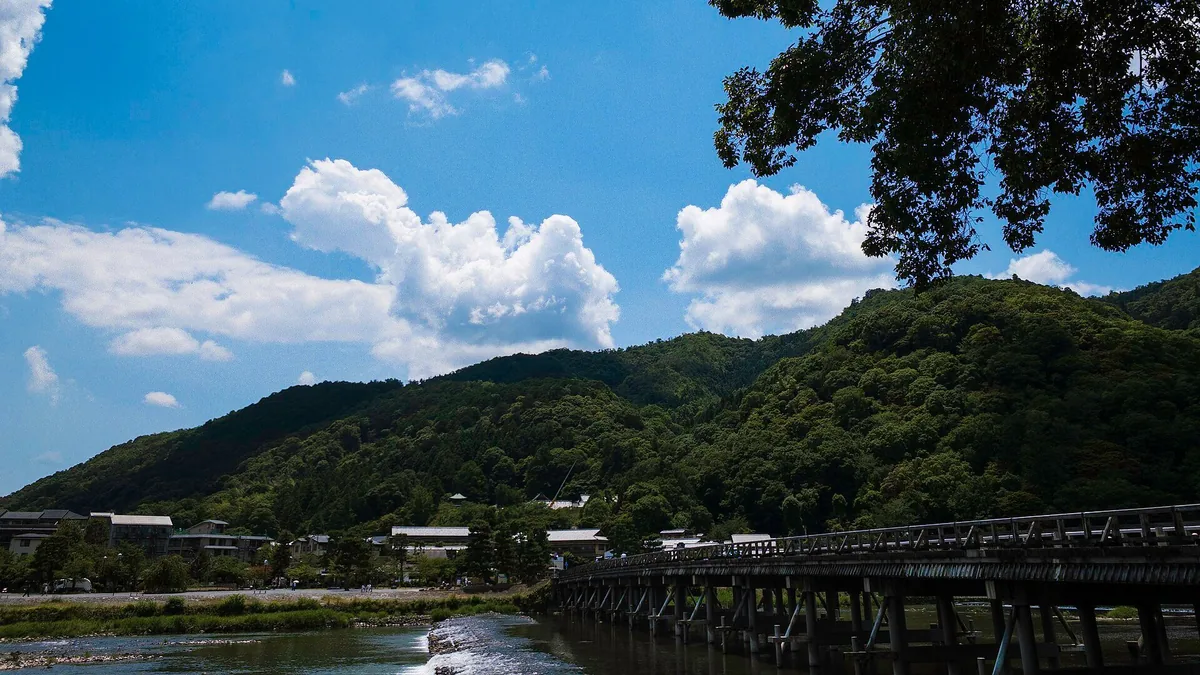
Arashiyama and Saga form a broad western Kyoto district rather than a single admission-based attraction. The Sagano Bamboo Grove is its most photographed path, but Kyoto’s official area guide also identifies Togetsukyo Bridge, temples, museums, parks and the quieter landscape of Okusaga. Planning improves when the grove is treated as a connector within this geography. The riverside around Togetsukyo is active and commercial; the bamboo route north of it leads toward temple grounds and Kameyama Park; farther north-west, Okusaga becomes more residential and subdued. The grove itself is a public landscape requiring care, not a staged photo installation. Kyoto has repeatedly asked visitors not to carve or damage bamboo. A thoughtful visit notices sound, filtered light and the transition between town, managed grove and mountain-edge scenery while keeping circulation moving. Travelers seeking a completely empty tunnel are likely to be disappointed. Those who build a walking sequence and include one quieter adjacent area will understand Arashiyama more fully than visitors who arrive only for a single photograph.
access
Choose among JR, Randen and Hankyu according to where your route begins
Arashiyama has several rail gateways. Kyoto’s official access guide presents JR Saga-Arashiyama as the direct rail choice from Kyoto Station, while the subway-to-Randen route distributes travelers through Uzumasa Tenjingawa and provides a useful alternative when the JR corridor is crowded. Hankyu Arashiyama serves the river’s south side and can suit travelers coming from Kyoto-Kawaramachi via Katsura. These stations are not interchangeable on foot: select one that matches the first and last stop of your walking route. The official guide discourages relying on a direct bus from Kyoto Station because road congestion can make it slow and crowded. Timings and service patterns change, so confirm the operating company’s current information on the day. From JR or Randen, orient yourself toward either the bamboo and Tenryu-ji side or Togetsukyo; from Hankyu, expect to cross toward the main district. Avoid large luggage, leave margin for busy platforms, and save a map showing all three rail lines before arrival.
highlights
Build the visit around bamboo, temple landscape, park and river
A balanced first visit connects four different scenes. Walk the Sagano Bamboo Grove slowly enough to notice the height, sound and shifting light without stopping traffic. Pair it with Tenryu-ji, whose official website provides current garden and temple information; confirm admission and opening conditions before arrival. Continue through or toward Kameyama Park for elevated river scenery, then descend to Togetsukyo Bridge and the commercial riverside. This creates a coherent loop instead of repeated backtracking. Travelers with more time can extend north-west into Okusaga, which Kyoto’s guide presents as a quieter area with historic scenery and additional temples. The Sagano Scenic Railway is another option, but it is a separate timed transport experience whose operating calendar and reservations must be checked with the railway. Do not assume every highlighted place is always open or free. The bamboo path’s value comes from its place in the larger district: grove, Zen landscape, mountain-edge park and Katsura River each contribute a distinct part of the visit.
planning
Use a one-way walking sequence and reserve more than bamboo-path time
The bamboo corridor itself can be walked relatively quickly, but an Arashiyama visit should be timed as a district walk. A compact route starts at JR Saga-Arashiyama or Randen Arashiyama, reaches the bamboo path and Tenryu-ji area, then finishes at Togetsukyo and a convenient station. A fuller route adds Kameyama Park or continues into Okusaga. Allow separate time for temple admission, meals, river viewpoints and station transfers; crowds can make short map distances slow. Kyoto’s official manners guide recommends an early route through Kameyama Park to the bamboo path as a way to distribute visitors. Reverse the loop if your arrival station or reserved activity makes that more logical. Travelers using Hankyu can begin at the river, while JR users can enter from the Saga side. If adding the Sagano Scenic Railway, treat its timetable as an anchor and verify operation and ticket conditions directly. Avoid booking a hard departure immediately after the minimum walking estimate, especially in peak foliage or blossom periods.
planning
Check live conditions, arrive earlier and use Kameyama Park or Okusaga to spread demand
Kyoto’s official congestion service provides forecast levels and live cameras for the bamboo path, Togetsukyo and nearby Saga-Arashiyama locations. Consult it shortly before travel instead of relying on a fixed claim about the quietest hour. The city recommends an early visit and a relatively less crowded route through Kameyama Park toward the bamboo grove. When the main corridor is dense, keep moving, photograph from the side without blocking others and continue toward a wider park or quieter Okusaga route rather than waiting in the center for an empty frame. Rail choice can also distribute demand: Kyoto promotes the subway and Randen alternative as well as JR, while warning that direct buses are vulnerable to traffic. Blossom and foliage seasons, weekends and special events can change conditions sharply. A useful fallback is to make the river, temple garden or a farther Saga stop the main experience and treat the bamboo corridor as a passage. Crowd strategy should improve the visit without pushing people into private streets or damaging vegetation.
etiquette
Protect the bamboo and respect a neighborhood used by residents
Kyoto’s guidance is unambiguous: do not carve, write on or otherwise damage bamboo. Injured stalks cannot simply be restored, and property damage can carry penalties. Stay on public paths and never enter the grove for a portrait. Do not litter; use an identified bin or carry rubbish away. Smoking on the street and walking onto railway tracks are prohibited, and drones are not an acceptable shortcut to an elevated image. Keep photography brief where the path narrows, avoid tripods that obstruct circulation, and do not stop an entire group in the center. Arashiyama includes homes, religious sites and working streets, so lower your voice away from the commercial center and do not use private entrances as backgrounds. At temples, follow the operator’s own rules for photography, food and sacred interiors. Kyoto’s responsible-travel page also asks visitors to use authorized transport services. Good etiquette preserves both the grove and daily life; it is the condition that allows the landscape to remain accessible.
safety
Expect long walking, slopes, road crossings and weather exposure
The central bamboo path is not a technical hike, but a complete Arashiyama circuit involves sustained walking, slopes through Kameyama Park, busy roads and potentially crowded station approaches. Kyoto’s access guide specifically warns pedestrians to remain on the sidewalk along busy Nagatsuji-dori. Wear stable shoes, keep bags close and avoid looking through a camera while moving. The grove can be dim in rain, while riverside and bridge areas are exposed to sun, wind and seasonal weather. Summer heat and humidity can accumulate over a multi-stop route; carry water, take breaks and shorten the park climb when needed. After heavy rain, use caution near slopes and the river and follow any closures. Check Kyoto’s official safety page for heat, typhoon, earthquake and emergency guidance, and consult transport operators if severe weather affects service. Travelers with limited mobility should research each component separately, because the public bamboo path, temple grounds, park and bridge do not share one accessibility standard.
seasonality
The bamboo stays green, while the district changes dramatically around it
The bamboo grove offers green structure in every season, but the wider district changes with blossoms, new leaves, summer humidity and autumn color. Kyoto’s official guide notes especially heavy interest during cherry-blossom and foliage periods, so use the live congestion forecast and allow more travel time then. Summer in Kyoto can exceed comfortable sightseeing temperatures and bring sudden downpours; the combination of humidity, temple visits and park slopes calls for water, breathable clothing and a shorter midday plan. In the rainy season, the grove’s color deepens but paving and slopes may be slick. Autumn mornings and evenings can cool quickly, while winter requires warm layers near the river and shaded paths. Scenic-railway operations, temple hours and seasonal events have their own calendars, so check each operator rather than assuming the district follows one schedule. Weather can improve atmosphere without improving safety. Keep a station-based exit route and be ready to omit the park or river extension if conditions deteriorate.
nearby
Pair places within Saga and Arashiyama before adding another Kyoto district
The strongest combinations are local: Sagano Bamboo Grove with Tenryu-ji, Kameyama Park and Togetsukyo forms a varied half-day or longer without cross-city transport. Okusaga adds quieter historic scenery for walkers willing to continue farther. A reserved Sagano Scenic Railway journey can also fit, but its station, operation date and ticket time must shape the route. If adding a second Kyoto district, choose one connected by the same rail corridor and leave generous transfer margin; Arashiyama is rarely efficient as a brief stop between attractions on opposite sides of the city. Meals and shops cluster near the bridge and main street, while quieter routes may offer fewer services, so plan breaks before extending into Okusaga. Families and slower walkers should reduce the number of paid sites rather than compressing every stop. Check Tenryu-ji and the railway directly for current operating conditions. The objective is a continuous landscape experience, not a tally of bamboo, bridge, temple, train and monkey photographs completed at speed.
planning
Common planning mistakes and how to avoid them
The most common error is treating the bamboo path as a stand-alone address and ignoring the district’s multiple stations. Choose arrival and departure stations around a one-way route. Second, do not take a direct bus from Kyoto Station simply because it appears simple; Kyoto’s official guide warns that road congestion can make it slow. Third, do not expect an empty corridor at midday or block the path waiting for one. Use the official live cameras, arrive earlier and continue through Kameyama Park or toward Okusaga. Fourth, never step into bamboo, carve stalks, enter train tracks or leave rubbish. Fifth, do not underestimate total walking because the grove itself looks short on a map; temple grounds, park slopes and the river add distance. Sixth, check the scenic railway and temple websites before building a timed itinerary. Finally, avoid adding several distant Kyoto icons after a full Arashiyama circuit. A coherent local half-day produces more value and less transit risk than an overpacked citywide checklist.